
Process Risk Management for Nigerian Businesses
Learn how Nigerian businesses can identify, assess, and control process risks 🔍 to avoid ₦loss and disruptions, boosting resilience and compliance in daily operations.
Edited By
Grace Mitchell
Risk management is no longer a luxury but a necessity for businesses operating in Nigeria's dynamic market. From fluctuating naira exchange rates to unexpected regulatory changes and erratic power supply, threats to business continuity abound. Without a proper plan, these risks can hit your bottom line hard.
Effective risk management means recognising potential problems before they escalate, then taking measurable steps to reduce their impact. It isn’t about eliminating risk altogether — that is impossible — but making sure you control it well enough to protect resources and meet your goals.
Consider a small fintech startup in Lagos facing cyber threats. Identifying cyber risk early can stop a data breach that might cost millions of naira or damage reputation irreparably. Likewise, a trader dealing with imported goods might face forex volatility; assessing this risk helps them decide whether to hedge currency exposure or adjust pricing.
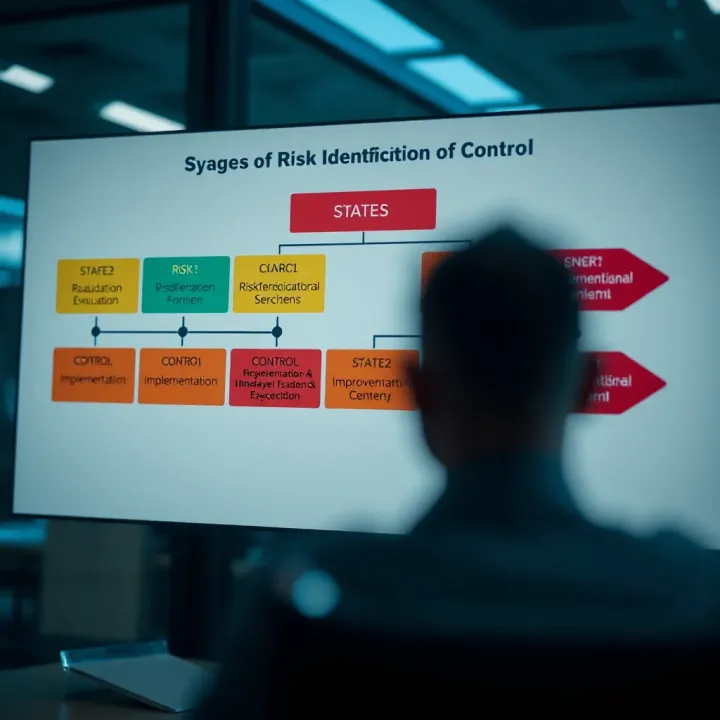
Clear, actionable steps form the backbone of practical risk management. These steps include:
Identifying Risks: Spot vulnerabilities specific to your sector or operations.
Assessing Risks: Measure the chance and potential damage of each risk.
Controlling Risks: Choose appropriate strategies to minimise impact.
Monitoring Risks: Keep an eye on risk factors that may change.
Improving Processes: Update your approach based on what works and what doesn’t.
Doing all these ensures your business doesn't just survive the curveballs Nigeria’s business climate throws — it stays competitive and resilient.
In the following sections, we will unpack each of these steps using examples from Nigerian markets and businesses, helping you navigate risks like currency swings, trade disruptions, and regulatory shifts with confidence.
Risk management is fundamental for any business aiming to navigate uncertainty successfully. It involves identifying potential threats that could derail a company's objectives and putting plans in place to handle these challenges. This process is especially vital in Nigeria, where economic fluctuations, regulatory shifts, and infrastructural issues create a complex environment for organisations.
A risk is any possibility that an event or action will negatively affect an organisation’s operations or goals. For example, a sudden increase in diesel prices can raise generator running costs for a manufacturing firm, squeezing profit margins unexpectedly. In the financial sector, risk could mean exposure to currency fluctuations that reduce the value of foreign investments. Identifying such risks early allows companies to prepare or avoid losses.
Risk refers to situations where the chance of an adverse event can be estimated or measured. For instance, an investor might calculate the probability of a stock price dropping based on past data. Uncertainty, on the other hand, involves unknown factors that cannot be predicted reliably. A new government regulation suddenly introduced without warning falls under uncertainty, as its impact on businesses remains unclear until more information surfaces.
Understanding this distinction helps Nigerian organisations focus their efforts on controllable risks, while remaining adaptable to unavoidable uncertainties.
Managing risks safeguards the ongoing operations of a business. Take a Lagos-based logistics company that depends heavily on road transport. Traffic congestion, theft, or regulatory crackdowns on commercial vehicles can disrupt deliveries. By having contingency plans such as alternative routes or security protocols, the company ensures goods still reach customers, maintaining reliability even when problems arise.
Financial losses from unaddressed risks can cripple organisations. For example, a retail chain neglecting cybersecurity might suffer ₦50 million lost in online fraud. Similarly, inadequate safety measures in factories can lead to accidents, harming employees and inviting costly lawsuits. Effective risk management includes investments in insurance, proper training, and security upgrades to protect both money and people.
In Nigeria, businesses face oversight from agencies like the Corporate Affairs Commission (CAC), Nigerian Communications Commission (NCC), and Central Bank of Nigeria (CBN). Failure to comply with rules — for example, tax filings, data protection laws, or industry-specific standards — risks penalties, fines, or suspension of licenses. Proactive risk management enables firms to track regulatory changes and align operations promptly, avoiding costly compliance lapses.
Good risk management is not merely about avoiding problems but strategically preparing for challenges. It transforms potential threats into manageable parts of running a business in Nigeria’s dynamic environment.
Understanding these basics ensures organisations can build robust frameworks for sustained success amid uncertainties.
Identifying risks early and grouping them effectively is the foundation of managing threats efficiently. Without this first step done properly, organisations may overlook critical issues until it's too late, risking financial losses or operation disruptions. In Nigeria, where business environments are often unpredictable, this phase helps firms act before problems escalate.
Brainstorming and checklists help gather diverse perspectives within teams. Brainstorming sessions encourage staff from different departments—finance, operations, and compliance—to share potential risks from their unique vantage points. This collective approach often uncovers hidden vulnerabilities, like outdated equipment or supplier delays. Checklists complement brainstorming by providing structured prompts to ensure no common risk category is missed. For instance, a manufacturing firm could employ a checklist covering machinery, workforce safety, and supply chain reliability.
Scenario analysis involves imagining specific situations to foresee how risks might unfold. Businesses create different plausible scenarios such as currency depreciation or sudden government policy changes, then evaluate their effects on operations. This method is practical in Nigeria, given the country’s exposure to regulatory shifts or naira fluctuation. A trading company might use scenario analysis to prepare for fuel subsidy removals—estimating impact on transport costs and adjusting budgets accordingly.

Consulting industry experts is a valuable strategy to validate early risk findings. External consultants or sector specialists bring fresh insights based on broader experience, often spotting industry trends or regulatory changes that internal teams might miss. For example, a fintech startup could seek advice from compliance experts to navigate evolving Central Bank of Nigeria (CBN) guidelines, ensuring their risk assessment remains current and relevant.
Operational risks pertain to failures in day-to-day activities. This could be anything from breakdown of machinery at a production line to an IT system crash affecting transaction processing. For instance, a Lagos-based logistics company faces operational risks if okada riders or danfo drivers are unavailable due to strikes or traffic. Grouping these risks helps firms prioritise investments in infrastructure, staff training, or contingency planning.
Financial risks involve possible monetary losses, including credit risks, liquidity crunches, or currency volatility. A cocoa export business in Nigeria, for example, may face financial risk when international prices fall or if banks restrict foreign exchange access. Distinguishing financial risks guides management towards hedging strategies or building cash reserves to cushion shocks.
Regulatory and compliance risks arise from changes in laws or failure to meet legal requirements. Nigerian businesses encounter this frequently, given shifts in tax policy by the Federal Inland Revenue Service (FIRS) or new rules from the Nigerian Communications Commission (NCC). Grouping these risks emphasises the need for legal counsel and ongoing staff training to avoid fines or operational stoppages.
External risks such as political or environmental threats lie outside direct company control but can have serious effects. Political instability, election cycle tensions, or natural events like flooding in the Niger Delta may disrupt supply chains or markets. A food processing firm in Port Harcourt could prepare by assessing these risks and building alternative supplier networks or storage capacity.
Early and accurate risk identification coupled with smart categorisation creates a clearer picture for decision-makers, enabling timely and targeted risk responses that protect business sustainability.
Organising risks by type helps Nigerian organisations focus resources properly and avoid spreading efforts too thin. Combining robust early detection techniques with thoughtful grouping ensures businesses stand a better chance navigating uncertain environments and protecting their assets effectively.
Assessing risk severity and likelihood is a critical step for Nigerian businesses aiming to protect their resources and realise their objectives. This phase helps organisations prioritise risks based on their potential impact and chance of occurring. Clear evaluation enables decision-makers to deploy resources effectively and avoid wastage on unlikely or low-impact risks.
Financial loss projection involves estimating the potential monetary damage a risk event could cause. For example, a Lagos-based manufacturing firm may forecast the financial fallout from supply chain disruptions due to fuel scarcity or port delays. Such projections help quantify possible losses—say, a ₦50 million drop in revenue—enabling management to weigh whether investing in alternative suppliers or backup inventory makes sense.
Beyond pure numbers, financial loss projection sets a realistic budget for risk mitigation. Knowing that a cyberattack might cost ₦20 million in system recovery and penalties guides firms to invest wisely in cybersecurity. Without this, businesses might either overspend unnecessarily or face devastating shortfalls.
Effect on reputation and customer trust can be just as damaging, often harder to measure but equally crucial. Nigerian businesses heavily depend on trust, especially in sectors like banking and telecoms. A data breach at a fintech startup, for instance, could erode customers’ confidence, leading to mass withdrawals or account closures.
Reputation damage can linger long after financial losses are accounted for, affecting future partnerships and market share. Therefore, risk assessment must include how incidents might disrupt customer relationships or tarnish brand value. The failure of a major airline following repeated crashes or safety issues illustrates this vividly—even if it survives financially short-term, trust erosion can cripple its operations.
Historical data analysis uses past records to predict how likely a risk is to materialise. A stockbroker might look at the frequency of market crashes or regulatory changes over the last decade in Nigeria to inform risk strategies today. Such data provide a solid foundation for forecasting, helping avoid guesswork.
However, Nigerian businesses often face circumstances where historical data is incomplete or unreliable due to economic volatility or poor record-keeping. In such cases, historical trends should be combined with other methods for balanced estimation.
Expert judgement supplements gaps where data fall short. Consulting industry professionals or risk analysts provides informed insights, especially on emerging challenges. For instance, experts may advise on political unrest risks in the lead-up to elections or on how new CBN policies could affect loan defaults.
This qualitative approach adds context and nuance, which is vital in Nigeria’s often unpredictable environment. When combined with data, expert judgement shapes a more accurate risk probability picture.
Using risk matrices combines impact and likelihood to map out risk priorities visually. A risk matrix helps organisations plot risks into categories like high, medium, or low based on both their chance and severity.
For example, a telecommunications company may place frequent power outages in a high-likelihood and medium-impact category, indicating a need for backup generators but not necessarily a complete shutdown of operations. Meanwhile, a rare but catastrophic flooding risk might fall into low-likelihood but high-impact, suggesting insurance coverage rather than active prevention.
Risk matrices clarify decisions, guiding Nigerian firms to focus on risks that truly threaten their survival or growth.
By systematically assessing severity and likelihood, businesses in Nigeria can move from vague fears to concrete actions, turning risk management into a strategic advantage rather than a daunting challenge.
Developing control strategies is the stage where identified risks move from theory to action. This step is vital because it shapes how an organisation minimises potential damage to its operations, finances, and reputation. Nigerian businesses, operating often in challenging environments with volatile markets, unreliable power supply, and regulatory changes, must design risk strategies that are not only effective but also practical and affordable.
Risk avoidance involves steering clear of activities or investments known to carry significant risk. For instance, a logistics company might avoid routes prone to kidnapping or banditry, even if they cut travel time. While avoidance can seem like the safest option, it isn’t always feasible for businesses heavily reliant on risky sectors or locations. Still, avoiding unnecessary risks where alternatives exist can save considerable headaches and losses.
Risk reduction seeks to lessen the severity or likelihood of risks without completely avoiding the activity. Take a manufacturing firm that faces frequent power outages. Installing solar backup systems reduces downtime and cuts diesel running costs, minimising operational risk. Similarly, enforcing stricter hygiene protocols in a mamas’ put mitigates health risks that could impact customer safety and business reputation. The focus here is on practical steps to control risk without abandoning the core business.
Risk sharing or transfer means passing part or all of the risk to another party, commonly through insurance or outsourcing. Many Nigerian SMEs, for example, buy property and fire insurance to cushion against losses from fire outbreaks, which are sadly frequent due to poor electrical wiring or petrol contamination. Outsourcing IT support to specialised firms can also transfer technical risk and improve service reliability without heavy internal investment. Risk transfer helps spread burden and access expert handling.
Risk acceptance occurs when the cost of mitigating a risk outweighs the expected loss, or when a risk is unavoidable. A boutique investing in imported goods might accept forex risk due to naira volatility because hedging costs are prohibitive. This approach requires clear understanding and readiness to absorb losses if risks materialise, demanding contingency plans to manage fallout when possible.
Process redesign means changing workflows or systems to cut risks at their source. A bank might redesign its loan approval process to introduce additional checks, reducing the risk of fraud or bad debts. In agriculture, shifting cultivation methods in line with seasonal rainfall patterns can mitigate risks of crop failure caused by droughts. This step ensures the risk controls fit the business’s specific context rather than applying generic solutions.
Staff training and awareness empower employees to recognise and manage risks daily. For example, banks train staff on cyber threats and phishing scams, helping to safeguard customer data and funds. In manufacturing, safety drills and equipment handling training reduce accidents and enhance compliance with regulations. Investing in continuous training creates a risk-aware culture that can spot emerging issues before they escalate.
Insurance and outsourcing supplement internal controls by leveraging external expertise and financial protection. Insurance against theft, fire or business interruption offsets potential financial shock. Outsourcing high-risk or specialised tasks, such as IT security or payroll management, ensures access to best practices and reduces operational risks. Combining internal efforts with third-party support enhances overall resilience.
Effective control strategies don’t just block risks; they balance cost, impact, and feasibility, ensuring the organisation thrives despite uncertainties.
Developing and implementing these control strategies tailor-made for Nigerian business challenges helps secure resources, build trust with stakeholders, and achieve sustainable growth in a landscape full of unpredictability.
Monitoring and reporting are the backbone of sound risk management, ensuring that strategies put in place remain effective over time. Without regular checks, even the best control measures can become outdated or miss emerging threats. Continuous improvement allows organisations, especially Nigerian businesses coping with dynamic market and regulatory environments, to adjust and strengthen their defences against new risks.
Key risk indicators (KRIs) serve as early warning signals highlighting changes in risk exposure. These metrics can be financial, operational, or linked to compliance. For example, a bank might track the percentage of non-performing loans as a KRI to flag deteriorating credit risk. By regularly observing KRIs, organisations can swiftly spot shifts and take action before risks escalate.
In Nigeria’s volatile economy, where currency fluctuation and regulatory shifts occur severally, KRIs help businesses stay alert. If a manufacturing firm sees delays in raw material deliveries rising above a threshold, it signals an operational risk needing attention — perhaps supply chain disruptions or port congestion.
Conducting regular internal and external audits allows organisations to evaluate how well risk controls are performing in practice. Audits can uncover weaknesses missed at the planning stage or errors in implementation. For instance, a trading firm might find during an audit that its foreign exchange hedge isn’t covering some exposures, prompting timely corrections.
Also, reviews ensure compliance with evolving regulations. Given Nigeria’s fluctuating tax, labour, and finance laws, periodic assessment is crucial to avoid penalties and reputational damage. These checks form the basis for continuous learning and refinement of risk measures.
Establishing clear reporting lines guarantees that risk information flows efficiently from frontline staff to decision-makers. Without defined channels, critical warnings about emerging threats can get lost, especially in larger Nigerian companies with complex structures.
For example, a risk identified by sales staff in a regional office must be promptly communicated to the corporate risk committee. Having designated roles and responsibilities helps avoid delays and confusion, enabling faster response.
Risk dashboards provide quick visual access to current risk status using graphs and colour codes. Nigerian financial institutions often use dashboards to display risk metrics like credit exposure or liquidity ratios in real-time. This allows managers to grasp complex data fast and direct attention where needed.
Detailed reports complement dashboards by providing in-depth analysis, trends, and action recommendations. Together, these tools enhance transparency and accountability throughout the organisation.
When risk events occur, thorough investigation is essential to pinpoint causes and prevent recurrence. Nigerian businesses that examine incidents like fraud, supply failures, or regulatory breaches gain valuable lessons. For example, a manufacturing plant could discover that inadequate staff training led to a safety lapse, requiring better training protocols.
Incident reviews also help challenge assumptions in risk assessments, exposing blind spots that need correction.
Risk registers document all identified risks and corresponding controls. Regular updates are necessary as new information emerges or circumstances change. Keeping these registers current ensures everyone knows what risks matter and what actions are in place.
For instance, if a fintech company updates its risk register after noticing rising cyber threats, it might add new control measures such as multi-factor authentication. This ongoing refinement is the hallmark of resilient risk management.
Consistent monitoring, open communication, and learning from experience transform risk management from a box-ticking exercise into a dynamic process that strengthens Nigerian organisations against uncertainty.
Learn how Nigerian businesses can identify, assess, and control process risks 🔍 to avoid ₦loss and disruptions, boosting resilience and compliance in daily operations.

Strategic risk management helps Nigerian businesses tackle currency swings, power cuts, and policy shifts for steady growth and long-term success 🚀📊
Discover how Enterprise Risk Management (ERM) helps Nigerian businesses tackle risks, boost profits, and stay strong amid market challenges 🇳🇬📊

🔍 Explore how risk management boosts Nigerian businesses by securing operations, improving decisions, ensuring compliance, and supporting lasting success.
Based on 11 reviews