

Understanding Forex Trading Robots in Nigeria
🤖 Discover how forex trading robots automate currency trades, their pros, cons, and risks. Learn smart ways Nigerian traders can manage them safely in the fast forex market.
Edited By
Amelia Price
In forex trading, understanding what a pip is can make a big difference in how you manage your trades and calculate profit or loss. A pip, short for "percentage in point" or "price interest point," is the smallest price move a currency pair can make. In most cases, this translates to the fourth decimal place in currency pricing – for example, from 1.2345 to 1.2346.
For Nigerian traders, knowing how pips work helps when dealing with key currency pairs like USD/NGN, EUR/USD, or GBP/USD. Since the naira plays a significant role in your trading decisions and converting profits back into local currency, getting pip calculation right can affect your bottom line sharply.

A single pip movement may look small, but it can influence your profit or loss significantly, especially when you trade larger volumes or use leverage.
A pip measures the change in value between two currencies. For most pairs, a movement of one pip equals a price shift of 0.0001 units in the quoted currency. For example, if the USD/NGN pair moves from 460.1200 to 460.1300, that’s a move of one pip.
However, some pairs involving the Japanese yen use two decimal places, so a pip is 0.01 instead. Always check the currency pair format before calculating.
Calculating Profit and Loss: Understanding pip changes lets you convert market movements into tangible money values.
Risk Management: Knowing pip values helps set stop-loss and take-profit points accurately.
Comparing Trades: Pips provide a standard measure to compare the size of gains or losses across different pairs.
Pip value depends on the trade size and the exchange rate of the currency pair. For example, suppose you are trading 10,000 units (a mini lot) of USD/NGN at a rate of ₦460 per USD:
One pip = 0.0001 USD
So, pip value in USD = 10,000 × 0.0001 = 1 USD
Converting to Naira: 1 USD × ₦460 = ₦460
This means each pip movement is worth ₦460 for your 10,000-unit trade.
In contrast, if you trade standard lots (100,000 units), your pip value multiplies accordingly.
Traders using platforms like MT4 or Nigerian brokers' interfaces often get pip values displayed automatically, but understanding the calculation helps verify if your risk parameters are set well.
Getting pips right can help you trade smarter in forex markets. It ties your strategy to real numbers — ensuring you don’t guess your gains or losses. As you progress, pip awareness becomes a vital part of understanding your trading performance in the Nigerian forex scene.
Trading forex involves dealing with currency price changes, and pips are the units that measure these changes. Understanding what a pip is helps you see how much you gain or lose when the market moves. For Nigerian traders using online platforms like MT4, MT5, or local brokers, knowing pips is fundamental for making informed decisions.
A pip, short for "percentage in point", is the smallest price movement a currency pair can make in the forex market. Traditionally, for most currency pairs, one pip equals a movement of 0.0001. For example, if the USD/CAD pair moves from 1.2500 to 1.2501, that represents a single pip change. However, for pairs involving the Japanese yen (JPY), a pip is usually 0.01 because their price quotations have fewer decimal places.
Consider the GBP/USD pair moving from 1.3000 to 1.3050; that change equals 50 pips. Nigerian traders often check these movements on their forex apps or websites like FXTM or HotForex. Understanding the size of a pip is the first step before calculating profits, losses, or determining stop losses.
Pips are essential because they standardise how traders measure price changes. Without pips, it'd be tricky to compare price movements across different currency pairs or trading positions. Knowing the pip value allows you to calculate how much a price move translates into actual profit or loss, particularly when converted to the Nigerian naira (₦).
For instance, if you bought EUR/USD at 1.1300 and it moves to 1.1350, you’ve gained 50 pips. Depending on your lot size, this could mean a respectable gain in your trading account. How much it translates to in naira depends on the pip value and exchange rates at the time. That explains why Nigerian traders often monitor pip movements closely, linking them to ₦ gains or losses.
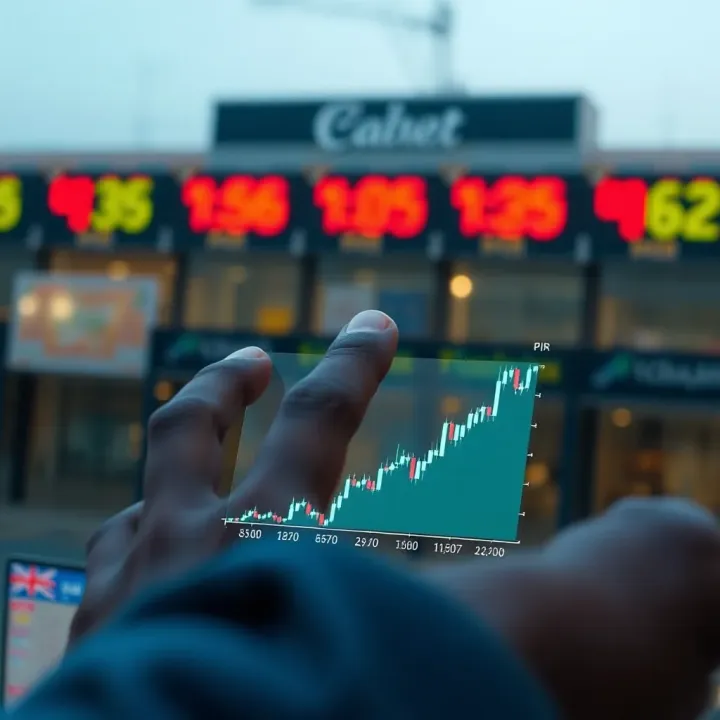
In summary, pips give forex traders a clear, consistent way to track price changes, plan their trades, and measure performance meaningfully.
Having grasped the definition and significance of pips, you can now move forward confidently to calculate pips and pip values, which directly impact how you manage risk and reward in your trading activities.
Calculating pips accurately is a foundational skill for anyone trading forex, especially Nigerian traders who need to understand how their profits and losses translate into naira. Pips represent the smallest price movement a currency pair can make, and knowing how to calculate them helps you measure market moves clearly and make informed trading decisions.
For most currency pairs, a pip is the fourth decimal place. For example, if the EUR/USD pair moves from 1.1200 to 1.1201, it has moved one pip. Calculating pip differences involves subtracting the opening price from the closing price and multiplying by the standard lot size (usually 100,000 units).
Let’s say you buy the EUR/USD at 1.1200 and sell at 1.1250. The difference is 0.0050 — equivalent to 50 pips. Traders using mini lots (10,000 units) or micro lots (1,000 units) scale this accordingly. This method is straightforward and works well since most currency pairs are quoted to four decimal places.
Pairs involving the Japanese Yen (JPY) behave differently because they quote to two decimal places instead of four. For instance, if USD/JPY moves from 110.00 to 110.01, that’s a one-pip move. Here, the pip is the second decimal place.
Moreover, some brokers support fractional pips, showing prices up to the fifth (or third for JPY pairs) decimal place for more precision. For example, EUR/USD might quote 1.12005, where the extra digit is a fractional pip, known as a pipette. While this allows tighter spreads and more precise trading, standard pip calculation focuses on the main decimal place.
Understanding these distinctions is vital for Nigerian traders to calculate their gains or losses exactly and decide the size of each trade.
Accurate pip calculation also helps you set sensible stop-loss and take-profit points. Knowing whether you’re dealing with standard four-decimal pairs or two-decimal JPY pairs prevents costly mistakes in position sizing and risk management.
By mastering standard and special cases of pip calculation, you better control your trades and protect your investments in the volatile forex market.
When trading forex, understanding pip value is vital because it directly affects your profit and loss calculations. In simplest terms, pip value tells you how much each pip movement is worth in your trading account's currency. For Nigerian traders, this often involves converting pip values into Naira (₦) to grasp the real financial impact. Knowing pip value helps traders manage risks better and decide appropriate trade sizes.
Pip value depends mainly on the currency pair you trade and the size of your trade, known as the lot. For most currency pairs quoted against the US dollar, one pip typically equals 0.0001 of that pair’s price. However, the pip value is quoted in the counter currency of the pair — usually the second currency in the pair. For example, if you trade EUR/USD, the pip value is in US dollars, whereas for USD/JPY, the pip value is in Japanese yen.
To use pip value effectively, Nigerian traders often convert the value into Naira. This conversion gives a clear picture of gains or losses in local terms, factoring in the current USD/NGN exchange rate, which fluctuates frequently.
The size of your trade—or lot size—multiplies the value of each pip. A standard lot equals 100,000 units of the base currency, and a pip movement in a standard lot can be worth about $10, depending on the pair. A mini lot is 10,000 units, while a micro lot is 1,000 units, with pip values proportionally smaller.
For example, with a mini lot, a one-pip move is about $1. So, if you trade one mini lot of EUR/USD and the pair moves 15 pips in your favour, your profit is roughly $15. However, if you trade multiple mini lots or a full standard lot, the pip value and potential profit or loss grow accordingly.
Suppose you trade one standard lot of GBP/USD, where one pip equals $10, and the current exchange rate is ₦775 to $1. A single pip movement equals ₦7,750 (₦775 × 10). A 20-pip gain means ₦155,000 profit (20 × ₦7,750). This shows how significant pip movements can be when translated into Naira amounts.
Another example: trading a mini lot of EUR/USD with a one-pip value of $1 and an exchange rate of ₦780 to $1 means each pip move is around ₦780. A 30-pip loss here leads to a ₦23,400 loss (30 × ₦780).
Nigerian traders who grasp pip value in local currency terms can make smarter decisions about position sizing and risk, avoiding surprises from market moves and naira fluctuations.
In summary, understanding pip value is crucial in gauging how forex price changes impact your trading capital in Naira. It guides smart trade sizing and risk control, helping you stay on top of your trading game amid the naira’s volatility and global currency fluctuations.
In forex trading, pips are the standard unit used to express price movement, making them essential for calculating profits and losses. Nigerian traders need to grasp how to measure these changes precisely, as it directly affects their trading decisions and overall returns. Tracking gains and losses in pips helps you evaluate trade outcomes consistently, irrespective of currency pairs or market volatility.
Calculating profit or loss in pips starts with knowing the entry and exit points of your trade. Subtract the opening price from the closing price and convert the difference into pips. For most currency pairs, one pip equals 0.0001 of the quoted price. For example, if you buy EUR/USD at 1.1500 and sell at 1.1550, your profit is 50 pips (1.1550 - 1.1500 = 0.0050 or 50 pips).
Remember, for pairs involving the Japanese yen (JPY), one pip corresponds to a change of 0.01, not 0.0001. So, if USD/JPY moves from 110.25 to 110.55, that's a 30-pip change (110.55 - 110.25 = 0.30 or 30 pips).
While pips indicate price movement, translating them into Naira (₦) reveals the actual financial impact. This depends on the pip value, which varies according to your lot size and the currency pair.
For instance, suppose you trade one standard lot (100,000 units) of EUR/USD. One pip movement generally equals US$10. Using an exchange rate of ₦775/$1, a 50-pip gain equals 50 x $10 = $500, which converts to ₦387,500 (₦775 x 500). That’s a substantial sum relative to typical Nigerian income levels.
If you trade smaller lots, such as mini lots (10,000 units), the pip value decreases to about US$1 per pip. So, a 50-pip gain would be ₦38,750 at the same rate.
Knowing your pip value in Naira lets you control risk more sensibly. If a stop-loss is set too wide, a small adverse move can wipe out more of your capital than expected.
By mastering pip measurement and its Naira equivalent, Nigerian traders can assess risks properly and manage their capital with precision. It also aids in setting realistic profit targets, improving chances for consistent gains amidst Nigeria’s dynamic forex scene.
Tracking pips closely is vital for any forex trader, especially in Nigeria where market volatility can catch many unaware. Pips measure price movements, so monitoring them helps you identify entry and exit points that align with your goals. Applying pip knowledge in your trading plan ensures you control losses and boost gains effectively.
Several reliable platforms help Nigerian traders keep an eye on pip movements. MetaTrader 4 (MT4) and MetaTrader 5 (MT5) remain popular because they offer real-time pip counters, charting tools, and alerts. For traders embracing mobile solutions, apps like Oanda and IG also provide clear pip monitoring, allowing you to track trades while commuting, perhaps stuck in Lagos traffic. Some brokers like Access Bank's trading platform and FXTM provide dashboards with pip calculations tailored to your lot size and currency pairs.
Using these tools, you can spot when a currency pair gains or loses a certain number of pips, helping you decide quickly if you should hold on or exit. For example, if your strategy allows a 20-pip gain per trade, setting an alert when the market hits that threshold avoids missing profits amid fast-moving naira-dollar rates.
Setting stop loss and take profit orders based on pips is practical and smart. This method lets you control risk precisely by defining how many pips you’re willing to lose or gain before automatically closing a trade. For instance, if you trade the USD/NGN and determine you don’t want to lose more than 50 pips, you set that stop loss so that the platform exits the trade if the market moves unfavourably by that amount.
Take profit similarly locks in your gains once your target pip count is reached. This approach helps prevent emotional decisions, such as holding on to a winning trade too long hoping for bigger profits. Plus, it works well in volatile periods, like during ember months when naira fluctuations spike.
Many Nigerian traders underestimate the importance of pip tracking, which leads to costly errors. One frequent mistake is not adjusting pip targets and stop losses to local market conditions, such as naira volatility or broker spreads. For example, using a tight 5-pip stop loss on USD/NGN might trigger frequent premature exits, eating into your capital.
Another pitfall is ignoring pip value changes linked to lot size or currency pairs. Traders often fail to convert pip gains or losses into actual naira values, losing sight of real profit or risk. Lastly, some rely too heavily on guesswork instead of using available trading tools to monitor pips effectively.
Precision in tracking pips and applying them to your strategy separates successful traders from those struggling to break even in Nigeria's forex market.
In summary, consistently monitoring pips, setting clear stop loss and take profit orders, and avoiding common errors help Nigerian traders manage risks and improve profitability. These practical steps bolster confidence and sharpen your edge in the challenging forex environment.
🤖 Discover how forex trading robots automate currency trades, their pros, cons, and risks. Learn smart ways Nigerian traders can manage them safely in the fast forex market.
Discover how MajalahTaujih guides Nigerian traders through forex trading risks, tips, and market insights for secure profits in Nigeria's forex scene 📈₦

📊 Learn forex trading sessions, their times, market vibes and overlaps. Master your trading with practical tips and a handy sessions PDF, tailored for Nigerian traders 🇳🇬.
Discover how Nigerian traders can master forex trading charts 📈, read key indicators, choose the best platforms, and boost their trading strategy for better profits ₦.
Based on 15 reviews