

Understanding Forex Trading Robots in Nigeria
🤖 Discover how forex trading robots automate currency trades, their pros, cons, and risks. Learn smart ways Nigerian traders can manage them safely in the fast forex market.
Edited By
Henry Morgan
When stepping into forex trading, understanding pips is one of the first and most important lessons. In simple terms, a pip is the smallest price move a currency pair can make in the market. It may seem like a tiny detail, but for traders in Nigeria and beyond, pips determine how much profit or loss you make with each trade.
Most currency pairs are quoted to four decimal places, where one pip equals 0.0001. For example, if the USD/NGN exchange rate moves from 462.5000 to 462.5100, that’s a one pip change. This tiny shift seems insignificant on paper, but when multiplied by the volume of your trade, it can quickly add up either in your favour or against you.
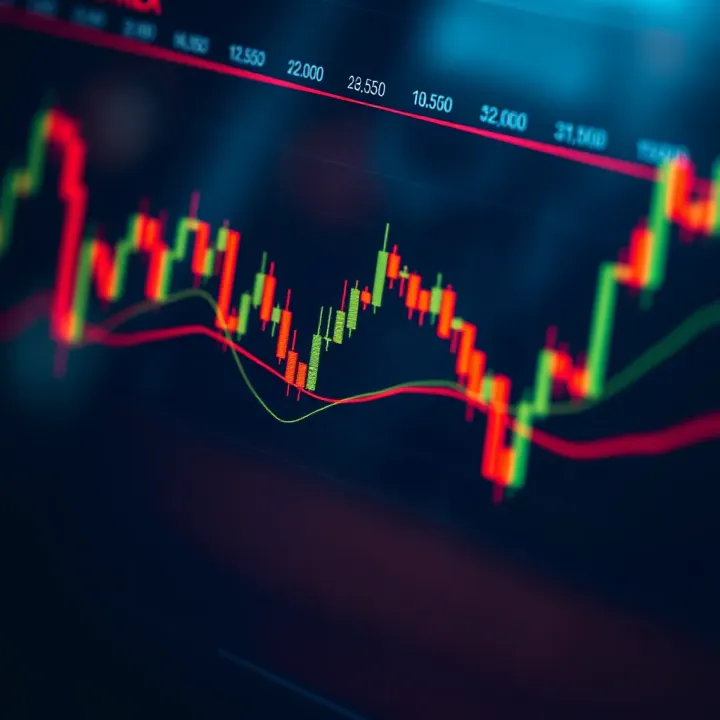
Knowing how to calculate pip values helps you manage your risk and potential returns in the often volatile Nigerian forex market.
Pip value depends on the currency pair and the size of your position. For pairs involving the Nigerian Naira (NGN), calculating pip value slightly differs because NGN is typically quoted against USD or EUR in cross rates. Traders must be aware of this, or they risk miscalculating their exposure.
Here is a quick look at how pips apply in trading:
Fixed Pip Value: Most platforms assign a fixed pip value for standard lot sizes—usually 100,000 units.
Position Size Influence: The bigger your trade size, the more each pip movement affects your profit or loss.
Currency Pair Variation: Cross currencies with NGN can cause variations in pip value, depending on the pair and current exchange rates.
For Nigerian traders, appreciating these details means better control over your capital. It influences how you set your stop losses, take profits, and calculate the ideal trade size.
Understanding pips is the backbone of developing a solid forex trading strategy. Without grasping this, managing your trades in the dynamic Nigerian forex market is guesswork. Our aim in this guide is to clarify all these aspects and help you use pips confidently to grow your trading skills.
The term "pip" is fundamental in forex trading because it represents the smallest price change that a currency pair can experience in the market. For Nigerian traders, understanding pips is not just academic; it’s practical. Knowing precisely how much price moves can affect your profits or losses helps you manage trades better. Practically, pips help quantify risk, set stop-loss points, and measure gains.
The word "pip" originated from "percentage in point" or sometimes "price interest point," which signifies a very small measure of price movement. This term emerged as the forex market grew larger and traders needed a standard, concise way to describe tiny changes in currency prices across different pairs. The name stuck because it made communication simpler, especially when discussing trade outcomes or setting strategy parameters.
A pip essentially measures the minimum incremental change in a currency pair’s exchange rate. For most pairs, one pip equals a change in the fourth decimal place, but this varies. For example, if the USD/NGN rate moves from 410.1234 to 410.1235, that 0.0001 difference is one pip. This helps traders understand how much the price has shifted. In practice, this precision is critical for deciding when to enter or exit trades.
Most major currency pairs, such as EUR/USD or GBP/USD, are quoted with four decimal places. This means one pip equals 0.0001 of the price. For instance, if EUR/USD moves from 1.1800 to 1.1801, it has moved one pip. Understanding this is crucial for Nigerian traders because currency fluctuations in these pairs can have significant financial implications, especially when converted into naira.
Pairs involving the Japanese yen (JPY), like USD/JPY or EUR/JPY, work differently. Instead of four decimal places, they are usually quoted with two decimal places. Here, one pip equals 0.01. So, if USD/JPY shifts from 110.25 to 110.26, that’s one pip. This distinction is vital to avoid confusion when calculating profits or losses, as the pip size affects position sizing and risk management.
Getting a solid grasp of what a pip represents lays the foundation for successful and confident forex trading, especially in a market as dynamic as Nigeria’s.
Pips measure the smallest price changes in forex pairs.
Most pairs quote pips at the fourth decimal place (0.0001).
JPY pairs quote pips at the second decimal place (0.01).
Understanding pip sizes is key for risk and profit calculations.
By knowing these basics, Nigerian traders can better navigate the forex market’s twists and turns and improve their trading outcomes through informed decisions.
Understanding how to calculate pip value is essential for any forex trader, especially in Nigeria where currency fluctuations impact daily decisions. Knowing the monetary worth of each pip helps you manage risk precisely and decide the size of your trades smartly. Without this, you might expose yourself to losses that could have been avoided with proper calculation.

The pip value largely depends on which currencies form the pair you’re trading. Forex pairs come in the format Base/Quote, like USD/NGN or EUR/USD. The pip refers to the smallest price move in the exchange rate, often the fourth decimal place for pairs like EUR/USD but the second decimal for yen pairs like USD/JPY.
For example, if you trade EUR/USD and the pair moves from 1.1250 to 1.1251, that 0.0001 change is one pip. But if you’re trading USD/NGN, pip size can differ because of local volatility and how the Naira interacts with the US dollar. This matters because the actual naira amount gained or lost per pip will shift depending on the pair’s base and quote currency relationship.
Trade size, measured in lots, dramatically affects pip value. Forex trading usually occurs in three lot sizes: standard, mini, and micro. A standard lot is 100,000 units of the base currency, a mini lot is 10,000 units, and a micro lot is 1,000 units.
Larger lot sizes mean each pip movement will result in a bigger monetary change. For instance, one pip in a standard lot could be worth about $10, but with a micro lot, the same pip might be worth just $0.10. So, if you’re trading smaller amounts typical for many Nigerian traders, understanding lot sizes lets you control your exposure and avoid betting too much naira on each trade.
To calculate pip value, multiply one pip (smallest price change) by the lot size, and then adjust for the current exchange rate if needed. For standard lots, one pip usually equals $10; for mini lots, $1; for micro lots, $0.10.
Suppose you trade EUR/USD with a standard lot, and one pip equals 0.0001. Your pip value is $10. If trading a mini lot, it drops to $1 per pip. This scaling allows traders to choose lot sizes fitting their capital and risk appetite.
Since most pip values are quoted in US dollars, Nigerian traders must convert these values into naira to understand real gains or losses. You do this by multiplying the pip value in dollars by the current USD/NGN exchange rate.
For instance, if one pip is $10 and the USD/NGN rate is ₦460/$, one pip equals ₦4,600. This conversion helps you monitor your trading account balance realistically and make informed decisions based on the naira value at stake each time the market moves a pip.
Knowing your pip value in naira keeps trading practical and grounded in what matters—your actual profit and loss in local currency.
Calculating pip value is not complicated but requires attention to the currency pair, lot size, and exchange rates. With these clear steps, Nigerian traders can sharpen their risk management and optimize their forex trading strategies.
Understanding pips is vital for any forex trader because it directly affects how you manage risk and calculate profits. A pip represents the smallest price move a currency pair can make and knowing its value helps you make sense of potential gains or losses. For Nigerian traders, this knowledge is key to avoiding costly mistakes in a volatile market.
Risk management is the backbone of successful trading. By measuring stop-loss limits in pips, you set clear boundaries on how much you’re willing to lose. For example, if you buy USD/NGN at ₦410 and set a stop-loss 50 pips below your entry, you’re limiting your loss to ₦50 per unit traded. This ensures you do not lose more than planned, preserving your trading capital against sudden market swings.
A practical case is when naira liquidity tightens during ember months, leading to sudden exchange rate shifts. Precisely tracking pips allows you to adjust stop-loss levels accordingly and avoid being wiped out by unexpected moves. Traders who ignore pip-based risk controls often face bigger, unplanned losses.
Knowing how each pip affects your trading account lets you protect your capital better. For instance, trading a standard lot means each pip change could equal about ₦1,000, but with a mini lot, it’s only ₦100 per pip. This difference affects how many lots you open and how much risk you take in every trade.
Capital protection is especially important for Nigerian traders facing daily challenges like power outages or unstable internet. You might need to close a position quickly if the market reverses by 20 pips in your direction. If you don’t understand the pip impact, you may hold losing trades longer than necessary, risking more than you can afford.
Translating pip movements into naira gains or losses helps you monitor your actual profit or loss. Say you bought EUR/USD when the pair was 1.1200 and it moves 30 pips to 1.1230; this means you have made 30 pips. If trading a mini lot, that’s about $3. Convert to naira at ₦460/$1, and you see roughly ₦1,380 in profit. Such clarity informs your exit or hold decisions.
By knowing exactly how pips translate to your naira wallet, you won’t be surprised by unexpected losses or gains. This precision is crucial in Nigeria’s forex market, where naira volatility can amplify your returns or losses quickly.
Understanding pips sharpens your strategy by letting you calculate risk-reward ratios clearly before entering trades. For example, if a setup offers a potential gain of 60 pips but you risk 20 pips, your risk-reward ratio is 3:1, which is typically favourable.
Besides, traders who grasp pip dynamics adapt faster when market conditions change. They can adjust lot sizes or stop-loss distances, ensuring their approach remains profitable despite fluctuations in naira exchange rates or forex broker spreads popular in Nigeria.
Knowing how to read and use pips gives Nigerian traders the confidence to plan trades better and keep losses manageable, especially in a market marked by unpredictability. It’s not just about numbers; it’s about making informed, smart decisions with your hard-earned naira.
When trading forex, many newcomers confuse pips with direct profit or think market volatility affects what a pip means. Clearing up these misconceptions helps Nigerian traders avoid mistakes that could cost them real money.
A pip is simply a unit of measurement for price movement in currency pairs—not money itself. For example, if the EUR/USD pair moves from 1.1050 to 1.1051, it moved one pip. But this change doesn't directly tell you how much you gained or lost. The actual profit depends on your trade size and the pip value in your base or quote currency.
Understanding this difference is practical because it stops traders from assuming a certain pip move equals a set amount of money. A 50-pip gain could mean ₦5,000 or ₦50,000 depending on your lot size. So, always calculate pip value before estimating profit or loss.
Market volatility shakes prices up and down, but a pip's size remains the same across sessions. Whether the market swings wildly or stays calm, one pip in EUR/USD is still 0.0001. This consistency helps traders assess risk accurately regardless of how crazy the market feels. Knowing this helps Nigerian traders stick to their plan without panic or overconfidence.
Fractional pips, or pipettes, add one decimal place to the standard pip measurement. So, instead of moving in increments of 0.0001, some platforms show prices like 1.10512, where the last digit is a pipette.
This extra precision matters in tight trades and scalping strategies. For example, a trading platform like MT4 or MT5 displays pipettes allowing traders to enter and exit at more accurate price points. It also helps Nigerian traders, especially those using small lot sizes, to manage trades finely and avoid unnecessary losses caused by rounding.
The presence of fractional pips slightly widens the spread — the difference between buying and selling prices — which translates to small extra costs per trade. While that might sound negative, this detailed pricing lets you better judge market conditions and execute trades closer to your target price, reducing slippage.
Remember, understanding spread and transaction costs in pipettes is key to keeping your trading expenses low and your strategies efficient, especially when trading with popular Nigerian brokers or platforms.
In summary, pips alone don’t equal money until you work out their value in your trade context. Market fluctuations don’t change what a pip is, but rather their value in your currency. Fractional pips improve trading precision, albeit slightly increasing cost through spreads — a worthy trade-off for better control.
Understanding these points helps Nigerian traders make smarter, clearer decisions on when to enter or exit trades, manage risk, and maximise profits.
Understanding how pip values interact with Nigeria's unique market conditions is key for any trader looking to make sensible decisions. Pips are not just abstract units but have real monetary implications, especially when naira volatility and broker choices come into play.
Naira volatility and exchange rate influence play a significant role in determining the actual value of a pip for Nigerian traders. Because the naira often faces sharp fluctuations against major currencies like the US dollar or euro, a pip movement can represent widely different amounts in naira terms depending on the exchange rate at the time. For example, a 10-pip gain in the USD/NGN pair might translate to more naira profit during a period of naira weakness, but less during periods of relative stability. This volatility means traders need to keep a close watch on macroeconomic factors like Central Bank of Nigeria (CBN) policies, petrol subsidy changes, and foreign exchange reserves, as these can affect the naira's strength and, subsequently, pip value.
Choosing the right broker and trading platform is equally important because not all brokers reflect pip values and spread costs the same way. Nigerian traders often prefer platforms like MT4, MT5, or proprietary apps from local fintech companies that offer naira-denominated accounts or easy naira-fiat withdrawals to avoid unnecessary forex conversion costs. Brokers that operate transparently with low spreads and clear pip calculations help traders avoid hidden fees that could erode profits. For instance, some platforms might show pip movements clearly but charge a high commission or widen spreads unfavourably — this can make seemingly profitable trades less so in reality.
Managing leverage while tracking pips is crucial. While high leverage can multiply gains from small pip movements, it equally multiplies risks. Nigerian traders often get tempted to use 1:100 or more leverage due to tight capital, but without careful pip tracking and clear stop-loss levels expressed in pips, they risk wiping out their accounts quickly. A practical approach is to calculate how much each pip is worth for your position size and set stop-loss or take-profit orders accordingly. For example, if you're trading a mini lot and know that each pip movement is worth ₦500, losing 20 pips means a ₦10,000 loss — this helps keep risk within affordable limits.
Power shortages and internet interruptions are common challenges in Nigeria, so using pips to gauge performance amid these disruptions becomes a handy technique. Because you may not always be able to monitor trades in real-time, setting automated stop-loss and take-profit points in pips ensures trades close at desired levels even if you're offline. This pip-based automation acts like a safety net. Moreover, by tracking pip gains or losses systematically, traders can assess their overall strategy effectiveness over time without relying solely on live data feeds.
Proficiency in applying pip knowledge tailored to Nigerian realities is what separates successful traders from the rest. Keeping an eye on naira trends, selecting reliable brokers, managing leverage smartly, and using pip-based tools for automation all improve your chances in the forex market.
By grounding pip strategies in the Nigerian market context — including the effects of naira volatility, broker features, and infrastructural challenges — traders become more confident and precise in their forex dealings.
🤖 Discover how forex trading robots automate currency trades, their pros, cons, and risks. Learn smart ways Nigerian traders can manage them safely in the fast forex market.
Discover how MajalahTaujih guides Nigerian traders through forex trading risks, tips, and market insights for secure profits in Nigeria's forex scene 📈₦

📊 Learn forex trading sessions, their times, market vibes and overlaps. Master your trading with practical tips and a handy sessions PDF, tailored for Nigerian traders 🇳🇬.
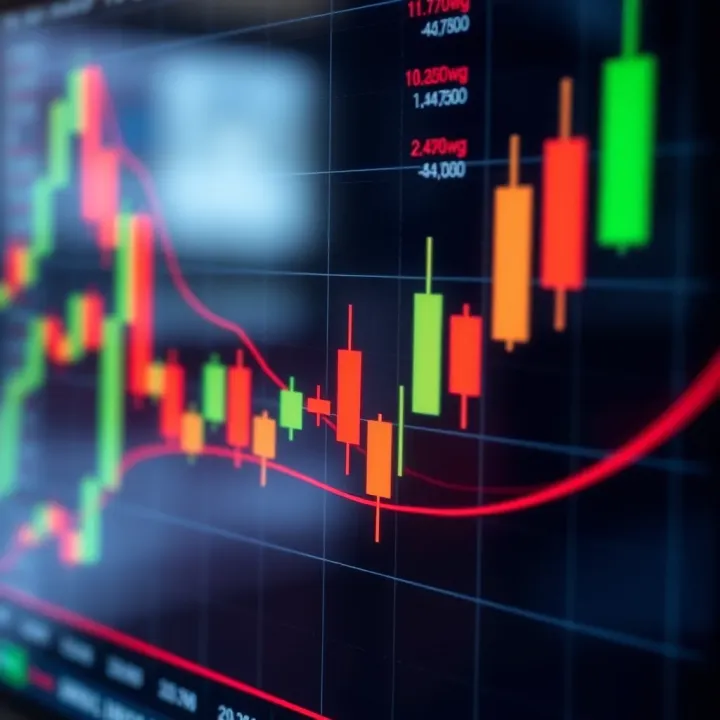
Discover how Nigerian traders can master forex trading charts 📈, read key indicators, choose the best platforms, and boost their trading strategy for better profits ₦.
Based on 11 reviews