
Understanding Forex Trading: How It Works in Nigeria
Learn how forex trading works 🌍 and how Nigerians can profit by exchanging currencies. Discover key strategies, risks, and local tips to trade smartly in ₦.
Edited By
Grace Mitchell
Forex trading is the process of exchanging one currency for another in the global marketplace. It is the largest financial market worldwide, with daily trades exceeding US$6 trillion. Unlike stock markets that operate during set hours, forex markets run 24 hours from Monday to Friday, allowing traders around the world to participate at any time.
At its core, forex trading involves buying a currency pair—for instance, USD/NGN (US dollar versus Nigerian naira)—where you speculate that one currency will rise or fall against the other. If you buy USD/NGN, you believe the dollar will strengthen compared to the naira. Successful trading depends on anticipating these value shifts.
The forex market is driven by supply and demand factors unique to each country’s economy, such as interest rates, inflation, political stability, and trade balances. For example, changes in Nigeria’s oil earnings can influence the naira’s strength relative to other currencies.
Currencies are always traded in pairs, reflecting the value of one currency against another. Traders can go long (buy) if they expect appreciation or short (sell) if they expect depreciation. The difference between the buying price and selling price is called the spread, which serves as a cost for trading.
Forex trading happens mostly through brokers and electronic trading platforms like MetaTrader 4, MetaTrader 5, or Nigerian fintech platforms such as OPay and Kuda. These platforms give access to real-time price charts, news, and order execution.
Suppose a Nigerian trader believes the US dollar will strengthen due to rising US interest rates. They buy USD/NGN at ₦460 to 1 USD. If the dollar rises to ₦470, the trader can sell to earn a profit. However, if the naira strengthens instead, selling would incur losses.
Benefits: High liquidity allows quick entry and exit; leverage enables trading larger positions with less capital.
Challenges: Forex is highly volatile; leverage can amplify losses; market news and global events can cause sudden price swings.
Understanding these basics helps you approach forex trading with realistic expectations and equips you to develop sound strategies tailored to Nigeria’s economic context.
Forex trading involves exchanging one currency for another in a global marketplace that operates 24 hours daily, five days a week. This market caters to a vast range of participants who seek to profit from the constant fluctuations in currency values. Understanding what forex trading means is crucial not only for investors but also for traders and financial analysts aiming to navigate its complexities effectively.
The foreign exchange market, often called the forex market, functions as the world’s largest financial market by daily turnover. It facilitates international trade and investment by enabling currency conversion, making it essential for businesses, governments, and financial institutions. For instance, a Nigerian exporter who receives dollars for goods sold abroad needs to convert those dollars to naira through the forex market.
The forex market operates without a central exchange; instead, it is a network of banks, brokers, and traders connected electronically. This decentralisation allows for continuous trading across major financial centres such as London, New York, and Tokyo, reflecting the global nature and scale of currency trading.
Several key players shape the forex market dynamics. Central banks, like the Central Bank of Nigeria (CBN), intervene to stabilise their currencies or control inflation. Commercial banks and financial institutions facilitate the bulk of trading, offering liquidity and conducting transactions for clients.
Additionally, hedge funds and institutional investors participate to diversify portfolios or hedge risks related to foreign investments. Retail traders — individuals using platforms such as MT4 or local brokers — now play an increasingly visible role, leveraging technology to access the forex market from Nigeria and beyond.
Forex trading revolves around currency pairs, expressing the value of one currency against another. Major pairs such as USD/EUR (US dollar/Euro) and USD/GBP (US dollar/British pound) dominate trading volumes due to their economic importance and liquidity. These pairs are popular for Nigeria-based traders looking to capitalise on movements between major economies.
The allure of major pairs lies in their generally tighter spreads, lower trading costs, and availability of market data, making them more straightforward for analysis.
Cross currency pairs exclude the US dollar but include combinations like EUR/GBP or EUR/JPY. These pairs provide trading opportunities beyond the major ones and tend to be less liquid. For example, the EUR/GBP pair reacts sensitively to political events in Europe, which can offer profitable setups if well understood.
Exotic pairs involve a major currency paired with currencies of smaller or developing economies. Think USD/NGN (US dollar/Nigerian naira). These pairs carry higher risks due to volatility, wider spreads, and lower liquidity. Nevertheless, traders who can manage these risks may find appealing profit potentials riding on shifts in emerging market economies or policy changes.
Understanding different currency pairs helps traders assess risk, liquidity, and potential profitability in forex trading.
By grasping what forex trading means — from the market’s global expanse to the variety of currencies exchanged — practitioners can enter the market with clearer expectations and better strategy alignment.

Understanding how forex trading happens is vital for anyone serious about profiting from currency markets. This section breaks down the core actions traders take — buying and selling currencies — and explains the meaning behind forex quotes and prices. These concepts form the backbone of trading decisions and help you grasp how profit and loss come about in the fast-paced forex world.
Spot market transactions involve the immediate exchange of currency pairs at the current market price. Unlike futures or forwards, the spot market settles within two business days, making it the most straightforward and widely used method in forex trading. For example, if a Nigerian trader wants to buy US dollars (USD) using Nigerian naira (₦), they enter a spot transaction that settles quickly, reflecting the live exchange rate. This immediacy allows traders to react fast to market moves and news, a crucial advantage in volatile markets.
The ability to swiftly enter and exit positions through spot trades means traders can capitalise on short-term price fluctuations. For instance, during the ember months when naira volatility spikes due to increased import demand, spot trading enables quick adjustments to protect investment or seize profit opportunities.
Role of leverage and margin in forex trading cannot be overstated. Leverage lets traders control positions larger than their actual capital by borrowing funds from the broker. For instance, with 50:1 leverage, a trader with ₦10,000 can effectively trade ₦500,000 worth of currency. While this amplifies potential profits, it also raises the risk of significant losses if the market moves against the trader.
Margin is the collateral required to open a leveraged trade. Brokers typically require a margin deposit, which acts as a security buffer. In practical terms, if a trader misses monitoring their margin or market trends, they may face a margin call, forcing a close of positions to prevent debt. Safe leverage use means balancing the scale of trades with available margin to avoid sudden account wipeout.
Bid and ask prices represent the buying and selling rates for currency pairs. The bid price is what the market will pay to buy the base currency, while the ask is the price to sell it. For example, if USD/NGN is quoted with a bid of ₦460 and an ask of ₦465, the trader can sell US dollars at ₦460 or buy them at ₦465. Knowing these prices helps traders decide when to enter or exit trades based on expected market movements.
These prices constantly fluctuate due to supply and demand changes, news releases, and market sentiment. Traders closely watch bid-ask dynamics to spot trends or liquidity shortages — common in less traded exotic pairs such as USD/ZAR.
Spread and its significance is the difference between the bid and ask prices. This gap is the broker's fee for facilitating trades. A smaller spread means lower transaction costs and better opportunities for profit, especially for frequent traders like scalpers.
For instance, a typical spread for USD/NGN might be ₦3-₦5, meaning traders start each trade with a small cost embedded in the price. High volatility or low liquidity can widen spreads, increasing trading costs. Hence, choosing brokers with competitive spreads and understanding spread behaviour during market events is essential for effective forex trading in Nigeria.
The mechanics of forex trading hinge on grasping how currencies are bought and sold instantly, underpinned by leverage and margin, alongside understanding quotes that guide trading decisions. Mastery here builds a solid foundation for navigating the complexities of forex markets confidently.
Understanding what drives currency values is essential for anyone involved in forex trading. Currency exchange rates fluctuate constantly due to various factors that reflect a country's economic health and political climate. Traders, investors, and financial analysts keen on effective forex strategies need to watch these indicators closely because they directly influence market sentiment and price movements.
Interest rates and inflation play key roles in determining currency strength. Central banks set interest rates to control inflation, which affects currency demand. For example, when the Central Bank of Nigeria (CBN) raises rates to curb rising inflation, the naira may strengthen as higher returns attract foreign investors. Conversely, if inflation runs high without rate adjustments, purchasing power declines, leading to currency depreciation.
Understanding this relationship helps traders anticipate market moves. If US inflation data comes out strong, the Federal Reserve might hike interest rates, boosting the US dollar against other currencies. Similarly, Nigeria’s fluctuating inflation rates can shift naira valuations, affecting trade and investment decisions.
Employment data and GDP growth provide insight into overall economic vitality. Higher employment rates indicate a robust economy, often strengthening the local currency as investor confidence increases. Nigeria’s National Bureau of Statistics regularly releases employment figures, which traders monitor for signs of economic expansion or contraction. A rising GDP signals growing economic output and may push the naira higher due to increased investor interest.
On the flip side, weak employment can hint at economic troubles, triggering currency sell-offs. For instance, if Nigeria's GDP growth slows significantly, forex traders might expect naira volatility or decline, impacting imports, exports, and investment flows.
Elections and policy changes often shift the political landscape, influencing forex markets. Political uncertainty typically unsettles investors, causing currencies to weaken. Nigeria’s general elections are watched closely by forex traders; the promise of reforms or instability affects naira demand. Policies on trade, subsidies, or monetary controls announced after election cycles can cause sudden currency swings.
For example, a new administration proposing tighter import controls may reduce naira demand, leading to depreciation. Traders who follow these political developments can position themselves better, avoiding surprise losses.
Global events influencing forex extend beyond domestic issues. Crude oil prices, international conflicts, or pandemics can cause ripple effects in currency markets. Nigeria, being an oil exporter, sees its currency value tied to oil price fluctuations. A sharp drop in global oil prices often hits the naira hard, as government revenues shrink.
Likewise, global trade tensions or crises in major economies like the US or China can test investor confidence worldwide. Forex traders must keep tabs on such events since they can cause rapid shifts in currency values across markets.
Keeping an eye on both economic data and political developments provides a more complete view for forex trading, helping you respond to market moves with clearer judgement.
In sum, understanding these factors and their practical influence enables traders and investors to navigate the forex market more confidently, particularly within Nigeria's unique economic and political context.
Getting to grips with the right platforms and tools is central to effective forex trading. For Nigerian traders, these resources offer the infrastructure needed to execute trades accurately, analyse market movements, and manage risks efficiently. The quality of your chosen platform can affect everything from order speed to how clearly you read price action, so knowing what’s available and how each tool functions will sharpen your trading edge.
MT4 and MT5 are the most widely recognised forex trading software globally, and for good reason. MetaTrader 4 (MT4) remains a favourite among traders for its user-friendly interface and reliable charting capabilities. It supports automated trading through Expert Advisors (EAs), which can execute trades based on programmed strategies without constant supervision. Meanwhile, MetaTrader 5 (MT5) builds on MT4’s foundation, offering more timeframes, additional trading instruments like stocks and futures, and a more advanced economic calendar — handy for traders interested in combining forex with broader markets.
In Nigeria, many brokers provide access to these platforms, sometimes adapting the software to better suit local trading conditions — such as integrations for deposits in Naira and withdrawal via popular Nigerian payment methods. Familiarising yourself with MT4 or MT5 is a solid starting point since their rich feature set quickly adapts to both beginners and experienced traders.
Broker platforms in Nigeria are also gaining ground, offering tailored services beyond global software. For example, platforms like Chaka, Cowrywise, and Kuda offer interfaces designed for local investors, including stock and forex trading, with integration to Nigerian banks and compliance with local regulations. These broker platforms often include educational resources and demo accounts, allowing traders to practise without risking capital. Choosing a broker who uses a reliable platform reduces downtime and ensures smoother execution when volatility spikes.
Technical indicators form the backbone of chart analysis, helping traders interpret past price action to forecast future moves. Common tools like Moving Averages (MAs), Relative Strength Index (RSI), and Bollinger Bands provide insight into trends, momentum, and volatility. Nigerian traders often rely heavily on these to time entries and exits in unpredictable markets. For instance, RSI can warn if a currency pair like USD/NGN is overbought or oversold, prompting timely trades.
Beyond raw technicals, fundamental analysis broadens the perspective by looking at economic reports, interest rates, and geopolitical events. In Nigeria, watching how CBN’s monetary policy decisions impact the Naira can offer clues. Traders use fundamental analysis methods such as reviewing GDP growth statistics, inflation reports, and FGN bond auctions to anticipate currency movements. Combining fundamental insights with technical signals often leads to more informed trading choices.
Successful forex trading combines solid platforms with sharp analysis. Master your tools and charts before risking significant capital.
In sum, selecting the right software, broker, and analysis tools should align with your trading style and goals. With a good setup, you’re better equipped to navigate Nigeria’s forex landscape and improve your chances of trading success.
Trading forex offers the chance of high rewards but comes with significant risks that every trader must understand. The volatile nature of currency prices means that gains can be substantial but losses can escalate quickly, especially when leverage is involved. Recognising the balance between potential profit and risk is crucial for traders aiming to succeed in the forex market.
Leverage allows traders to open positions much larger than the capital they have. For example, with leverage of 100:1, a trader can control ₦100,000 worth of currency with just ₦1,000. While this magnifies potential gains, it equally amplifies losses. A small adverse movement of 1% in the currency value could wipe out the entire invested capital.
This means that even skilled traders can face substantial losses if they do not manage leverage carefully. For instance, if the Naira weakens against the US dollar by 2% on a leveraged position, the trader's loss would double that 2% loss relative to their invested amount, quickly eating into profits or capital.
To manage exposure, traders should set strict limits on leverage levels depending on their risk tolerance and experience. Many brokers offer lower leverage options suitable for beginners, which help contain possible losses. Besides, using stop-loss orders to automatically close losing trades prevents runaway losses. Regularly reviewing positions and avoiding overtrading also contribute to safer use of leverage.
The forex market is highly volatile, driven by economic data releases, geopolitical events, and sudden market sentiment shifts. Predicting exact price movements consistently is near impossible. This inherent unpredictability requires traders to set profit targets that are realistic rather than aiming for quick, outsized gains.
Some days, the market may be calm with limited price swings, while others present sudden spikes due to announcements like CBN policy changes or economic shocks. Expecting profits during low-volatility periods can lead to frustrations or risky trades. Being flexible and adjusting targets according to market conditions helps in maintaining steady progress.
Risk management strategies play a vital role here. This includes diversifying trades, properly sizing positions, and consistently applying stop losses. Well-disciplined traders accept occasional losses as part of trading and avoid chasing losses. Over time, a focus on steady gains with controlled risk leads to better outcomes than trying to hit big profits quickly.
Remember: Healthy trading involves protecting your capital as much as seeking gains. The best traders prioritize managing risk because, without capital preservation, profits become irrelevant.
In summary, understanding the risks related to leverage and setting achievable profit goals backed by strong risk management helps traders navigate the forex market more confidently. It is not about winning every trade but about sustainable success over time.
Starting forex trading without a clear strategy is like setting out on a journey without a map—you might get somewhere, but not where you intended. Developing basic strategies early helps you understand the trading environment, manage risks better, and position yourself for consistent growth in the market.
One of the earliest decisions you must make as a trader is picking a trading style that matches your personality, time availability, and financial goals. Day trading involves opening and closing positions within the same day, taking advantage of small price movements. It demands close market monitoring and quick decision-making. For example, a day trader in Lagos might focus on the USD/NGN pair during active market hours, making several trades to capture short-term price swings.
On the other hand, long-term positions involve holding trades for days or weeks, often relying on broader economic trends. If you prefer not to be glued to your screen and can tolerate slower returns, this style suits you better. Someone working a full-time job might prefer this approach, analysing fundamental indicators like interest rate changes by the Central Bank of Nigeria (CBN) before entering a position.
Scalping and swing trading offer other alternatives within forex trading. Scalping focuses on very short-term trades, sometimes lasting just minutes, aiming for quick, small profits. It requires discipline and fast execution, which might suit traders with access to reliable internet and minimal distractions. Swing trading, however, holds positions for several days to capture price ‘swings’ caused by market volatility. A swing trader could, for instance, watch how Nigerian economic reports impact the naira and adjust trades accordingly over a few days.
Using demo accounts is crucial before committing real money. Demo accounts simulate the live market environment, allowing you to practice various strategies without risking your capital. For beginners, this builds confidence and familiarises them with platform tools and order types. A trader might spend weeks on a demo account, testing how news affects forex prices, gradually refining their approach.
Finding reliable learning materials is equally important. In Nigeria, resources like the CBN’s publications on forex, recognised financial courses, and tutorials by reputable brokers can provide solid foundations. Avoid get-rich-quick schemes or unverifiable online content. Instead, focus on structured courses that cover technical analysis, risk management, and market psychology. Consistent learning will sharpen your skills and prevent costly mistakes.
Starting forex trading with clear strategies and proper practice puts you ahead of many who jump in blindly. It’s not just about making quick profits but building sustainable trading competence over time.
Learn how forex trading works 🌍 and how Nigerians can profit by exchanging currencies. Discover key strategies, risks, and local tips to trade smartly in ₦.
📈 Learn how forex trading works in Nigeria, get insights on key players, popular platforms like OPay & GTBank, plus tips to manage risks & boost your ₦ returns.
📈 New to Forex trading in Nigeria? Learn key terms, how markets work, top strategies, best platforms & tips to manage risks confidently & safely. 🇳🇬
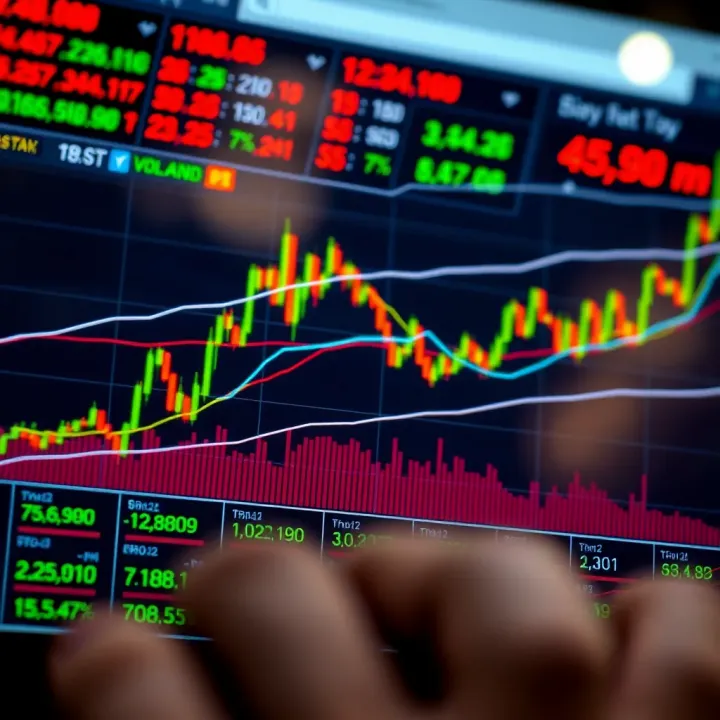
📊 Learn forex trading basics with this essential guide for beginners! Understand market essentials, trading steps, strategies & risk control for success.
Based on 13 reviews