
Benefits of Forex Trading Explained
Explore the key benefits of forex trading 🌍💹—easy market access, high liquidity, profit potential, and smart risk management to boost your investment choices.
Edited By
Rachel Morgan
Forex trading, simply put, is the buying and selling of currencies. Today, it forms a ₦trillion-dollar global market, vital to businesses, investors, and governments alike. But how did it all begin? To appreciate the modern forex market, we need to travel back through history and take note of key developments that shaped currency exchange as we know it.

Currency exchange has its roots in ancient times when traders needed to swap different coins and metals across kingdoms. Long before electronic screens and algorithms, merchants exchanged goods and currencies in bazaars to facilitate trade between lands. For example, in Yoruba markets, traders carried cowries or manilla bracelets as currency, enabling trade beyond local borders.
As international trade expanded during medieval times, especially with the arrival of Portuguese and later Dutch and British traders, more standardised forms of currency exchange appeared. Bills of exchange, an early form of credit, allowed merchants to avoid carrying heavy coins during long journeys, hinting at modern banking operations.
The 19th and early 20th centuries marked the rise of the gold standard. Economies linked their currencies to gold, providing fixed exchange rates. For Nigeria, under British colonial rule, the Nigerian pound was pegged to the British pound sterling. This brought relative stability but limited flexibility during economic shocks.
This period laid frameworks for formal currency markets and the idea that governments play a role in regulating exchange rates. Still, trading was largely confined to banks and governments.
The Second World War changed forex trading dramatically. The 1944 Bretton Woods Agreement established fixed exchange rates pegged to the US dollar, which was convertible to gold. This system encouraged international trade growth but started to buckle during the 1970s due to inflation and US dollar pressures.
In 1973, major economies moved to floating exchange rates, allowing currency values to fluctuate according to market demand. This shift opened the door for a true global forex market.
The transition to floating rates was a turning point, transforming currency exchange from a bureaucratic exercise into a vibrant, 24-hour global market driven by traders and investors.
By the 1980s and 1990s, technology kicked off the digital revolution in forex. Electronic platforms like Reuters and Bloomberg emerged to provide real-time quotes. Today, trading platforms like MetaTrader, Pepperstone, and Nigerian fintech firms such as OPay and Kuda offer direct market access to individual traders.
The spread of internet connectivity further opened access, allowing retail traders in Lagos, Abuja, and beyond to participate alongside banks and multinational funds.
Ancient barter and coin exchange practices laid the groundwork.
Gold standard linked currencies, providing stability but limiting flexibility.
Bretton Woods and the shift to floating rates created modern forex.
Electronic trading platforms broadened market access and liquidity.
Understanding this progression helps traders and investors grasp how forex became central to global finance, reflecting economic strength, political shifts, and technological advances.
Understanding the early history of currency exchange provides essential context for grasping how forex trading evolved. Before the existence of formal currency systems, trade depended heavily on simpler methods like barter and commodity exchange. Appreciating these origins helps traders recognise the fundamental challenges that currency trading sought to solve — mainly, how to facilitate transactions efficiently across different communities.
Trade originally relied on barter systems, where people exchanged goods directly without using money. For example, a farmer with yams might trade with a fisherman for fish. While straightforward, barter had notable drawbacks, such as requiring a "double coincidence of wants" — both parties needed to want what the other offered. This made trade limited and inefficient, especially as communities grew and diversified.
The practical impact of barter’s limitations created demand for a more flexible medium of exchange. This led to the emergence of currency, which acted as a universally accepted item traders could use to buy goods and services. Early Nigerian markets, like those in ancient Benin or Kano, likely saw cowry shells or metal objects serving as currency surrogates, smoothing trade between different groups.
Currency simplified trade by providing a standard store of value and measure of worth, which made transactions faster and more scalable. Instead of trying to match specific goods, traders could price items in currency units. This made Lagos or Kano market days more predictable, as people knew the equivalent value of their goods in shells, cloth, or later minted coins.
This system also made it possible to accumulate wealth and invest in ventures beyond immediate subsistence needs — a foundational development for modern commerce and, eventually, forex trading.
Ancient marketplaces often attracted merchants from various regions, each bringing goods priced in different currencies or barter items. Money changers, therefore, played a crucial role by exchanging one currency for another, enabling merchants to trade smoothly across cultural and political boundaries.
In places like the old Trans-Saharan trade routes, currency conversion was vital for exchanging gold, salt, beads, and textiles. Money changers became trusted figures, establishing early systems for calculating exchange rates and assessing coin authenticity.
Currency exchange today is complex, but its roots trace back to these early marketplace practices. Traders developed basic exchange rate systems by comparing the value of different coins or commodities, factoring in purity and weight. For instance, a merchant in Timbuktu might accept a certain number of gold dinars in exchange for salt measured in leather bags.
These early practices laid the foundation for the concept of exchange rates — a cornerstone of modern forex trading — highlighting how merchants navigated economic diversity and uncertainty long before formal banking systems.
Understanding these beginnings reveals how the need for efficient, reliable currency exchange grew out of everyday trade challenges, carving the path for today's vast global forex markets.
The formalisation of forex mechanisms marked a turning point in how currencies were exchanged internationally. As global trade expanded in the 19th and early 20th centuries, the need for stable and predictable currency values became critical. Without clear systems to guide exchange rates, merchants and governments faced high risks from volatile currency values, which could disrupt trade agreements and economic planning.
This section covers two main phases: the era of the gold standard and fixed exchange rates, followed by the post-World War II arrangements, including the Bretton Woods system. Understanding these systems helps traders and investors grasp how today's forex markets evolved and why modern exchange rates behave the way they do.
The gold standard emerged as an elegant solution to currency instability. Under this system, currencies were directly convertible to a fixed amount of gold, ensuring a common anchor for value. For instance, one British pound was defined as 0.2354 grams of gold. This backing boosted confidence among traders and governments by limiting inflation and currency manipulation.
Adoption of gold-backed currencies encouraged countries to maintain discipline in their monetary policies since issuing money beyond their gold reserves was practically impossible. Notably, many European and colonial countries adopted the gold standard during the 19th century, facilitating smoother international trade and investment flows.
With currencies fixed to gold, exchange rates between nations were steady, reducing uncertainty for importers, exporters, and investors. For example, a Nigerian trader importing textiles from Britain could reasonably predict the naira-to-pound exchange rate, simplifying pricing and cost calculations.
This fixed exchange environment fostered growth in global commerce while stabilising economies recovering from periodic crises. However, the rigidity of the gold standard sometimes hindered countries' ability to respond flexibly to economic shocks, leading to strains in the system by the early 20th century.
After World War II, the Bretton Woods agreement created a new framework where currencies were pegged to the US dollar, itself convertible to gold at $35 per ounce. This arrangement recognised the economic dominance of the United States and aimed to avoid the deflationary shocks that plagued the interwar years.
Bretton Woods established institutions like the International Monetary Fund (IMF) to oversee currency stability and provide financial assistance to countries facing balance of payment problems. For traders and investors, this brought greater predictability and confidence during a critical period of global economic rebuilding.
The Bretton Woods system began to unravel in the late 1960s as the US struggled to maintain gold convertibility amid rising inflation and deficits. By 1971, the system collapsed, ushering in an era of floating exchange rates where currency values were set by market forces rather than fixed pegs.
This shift allowed greater flexibility for countries to adjust monetary policy according to their economic conditions. However, floating rates also introduced volatility, presenting both risks and opportunities for forex traders. Nowadays, various currencies, including the naira, fluctuate within managed bands or float freely, reflecting economic fundamentals and market sentiment.
The transition from fixed to flexible exchange rates fundamentally transformed forex trading, introducing new dynamics that require ongoing analysis and adaptation from market participants.
In summary, the formation of formal forex mechanisms laid the groundwork for today’s complex currency markets. Knowing how gold-backed systems and Bretton Woods shaped these markets equips traders and investors with a clearer perspective on currency behaviour and risk management.
The evolution of modern forex trading markets marks a decisive turn from rigid exchange systems to a more dynamic and accessible currency market. This phase is essential for understanding how forex trading became a major financial activity that influences global economies and individual investors alike. It represents the shift from fixed currency values dictated by government policies to flexible rates shaped by real-time supply and demand.
The Bretton Woods system, which fixed currencies to the US dollar and by extension gold, ended in 1971 due to growing imbalances and the US dollar's decreasing credibility. This termination opened the door for currency market liberalisation, allowing currencies to be traded more freely across borders. Market forces rather than fixed standards began determining exchange rates. For instance, this shift enabled Nigeria’s naira to float more freely against stronger currencies, impacting import costs and inflation.
This liberalisation made the forex market more responsive to economic fundamentals, political events, and external shocks. Traders and investors gained new opportunities to speculate on these fluctuations, turning forex trading into a true global market. This change increased liquidity and broadened participation beyond official institutions to include banks, corporations, and individual investors.
Floating exchange rates arose as currencies were allowed to fluctuate based on market demand and supply. Unlike the fixed rates of Bretton Woods, floating currencies respond immediately to shifts in trade flows, interest rate differentials, and geopolitical developments. This system permits governments to adopt monetary policies suited to their domestic needs without defending a fixed exchange rate.
For example, when Nigeria’s Central Bank adjusts interest rates or intervenes in the foreign exchange market, the naira’s value responds directly to these actions and global market perceptions. Floating rates also expose currencies to volatility, but this volatility provides traders with more opportunities to profit from price movements.
The interbank forex market expanded rapidly as banks began to trade currencies among themselves to manage risk and meet client demands. This market became the backbone of global forex trading, with daily turnover reaching trillions of dollars. It operates primarily through electronic networks connecting major financial centres like London, New York, and Tokyo.
Nigeria’s banks, such as GTBank and Access Bank, increasingly participate in this interbank market to support foreign trade settlements and currency hedging for corporate clients. The growth of interbank trading enhanced market depth and liquidity, making it easier for all participants to execute trades swiftly and at competitive prices.
Banks and financial institutions are pivotal in shaping forex markets. They provide liquidity by continuously quoting buy and sell prices, facilitating transactions for importers, exporters, investors, and speculators. Their large trading volumes also help stabilise markets by absorbing sudden shocks.
In Nigeria, banks often act as intermediaries between the Central Bank of Nigeria (CBN) and the broader market. They execute CBN policies such as forex interventions to manage naira stability. Additionally, they offer forex-related services like forward contracts and swaps, enabling businesses to hedge against adverse currency movements.
The rise of modern forex markets fundamentally transformed currency trading from a government-controlled activity into a vibrant, liquid marketplace accessible worldwide.
Currency market liberalisation replaced fixed rates with flexible pricing
Floating exchange rates respond to real-time economic signals
Interbank trading built the core of global forex liquidity
Banks and financial institutions anchor the forex ecosystem
Understanding these developments helps traders and investors appreciate the forces that drive currency values and the opportunities in today’s forex environment.
Technological advances have reshaped forex trading, making it more accessible and efficient than ever before. These developments broke barriers, transforming what was once a domain limited to large banks and financial institutions into a market that individual traders can access easily. The shift from manual to electronic systems not only sped up transactions but also introduced transparency and broadened participation.
Electronic communication networks (ECNs) are at the core of modern forex trading. ECNs connect buyers and sellers directly, cutting out traditional intermediaries like brokers or banks in some cases. This leads to tighter spreads and more competitive prices. The practical relevance lies in faster execution of trades and around-the-clock market access—advantages that were unthinkable in pre-digital times.
The rise of retail access to forex trading owes much to ECNs and the internet. Previously, currency trading needed deep pockets and specialised knowledge, typically reserved for institutional players. Today, individuals with as little as a few thousand naira can open accounts with brokers providing electronic platforms. These platforms offer user-friendly interfaces and tools that guide newcomers, making forex trading less intimidating and more transparent.
The growth of online brokers and mobile trading apps has further democratised forex trading. Platforms such as XM, FXTM, and HotForex provide Nigerians with direct market access, detailed charts, and real-time price updates. Mobile apps have enabled people to trade on the go, turning smartphones into portable trading desks. This convenience allows traders to respond swiftly to market events, an essential factor given forex market volatility.
For Nigerian investors, internet and mobile technology unlock trading opportunities previously out of reach. Many brokers accept local currencies and support Nigerian payment methods like bank transfers through GTBank or mobile money services, easing fund deposits and withdrawals. Additionally, the availability of educational content, webinars, and demo accounts on these platforms helps Nigerian traders build skills without risking real money.
Technological advances and improved accessibility have levelled the playing field in forex trading, empowering Nigerian investors to participate actively in global currency markets.
In summary, electronic trading platforms, alongside internet and mobile technologies, have reduced entry barriers, lowered transaction costs, and provided Nigerians with practical tools to engage in forex trading confidently, wherever they are. These innovations have changed forex from an exclusive affair to a vibrant market accessible to many.
The current status and future outlook of forex trading form a vital part of understanding the market's dynamics. As the global forex market grows, keeping track of its size, activity, and emerging trends helps traders, investors, and analysts make informed decisions. Plus, recognizing Nigeria’s role in this ecosystem offers practical insights specific to local investors.
Daily turnover and liquidity play a significant role in forex trading's vibrancy. On average, the global forex market sees a daily turnover exceeding US$6 trillion, making it the most liquid financial market worldwide. This high liquidity ensures traders can enter and exit positions swiftly without large price fluctuations. For instance, when a Nigerian investor trades US dollars against the naira, the market’s depth helps maintain fair pricing and reduces slippage.
Liquidity also means access to a diverse range of currency pairs and market times. Traders can participate 24 hours a day, responding quickly to geopolitical or economic news that impacts currency values. This constant activity presents numerous opportunities, but it also demands vigilance and quick decision-making.
Nigeria’s role in the forex ecosystem has grown, thanks to increased foreign direct investment, remittances, and growing interest among retail traders. While Nigeria is yet to rival established forex hubs like London or New York, its vibrant economy and expanding digital infrastructure position it as a key player within Africa. For example, platforms like OPay and Flutterwave cater to Nigerian traders, connecting them to global currency markets.
Local regulatory bodies, including the Securities and Exchange Commission (SEC), have begun formulating clearer policies to integrate Nigeria more deeply into the global forex web. Nigerian firms and investors now have better access to international liquidity pools, enabling more efficient currency management for businesses and individuals alike.
Regulatory frameworks and compliance are becoming increasingly critical as forex trading expands. Governments worldwide, including Nigeria’s, focus on protecting investors and ensuring market integrity. The SEC’s recent steps to regulate forex brokers trading within Nigeria aim to reduce scams and encourage transparency. This regulatory tightening helps genuine traders operate with confidence but also means brokers must meet higher compliance standards.
On the flip side, maintaining balance is tricky since overly strict regulations might stifle innovation or restrict market access for small-scale traders. For instance, some Nigerian investors express concerns about excessive documentation and capital requirements limiting participation.
Technological innovations and risks continue to reshape forex trading. The rise of algorithmic trading, mobile trading apps, and blockchain-based payment systems offers traders faster execution, diverse tools, and transparency. Nigerian traders increasingly rely on mobile platforms for forex due to widespread smartphone use, transforming how currency exchange operates at the grassroots.
However, technology also introduces risks such as cyberattacks, data breaches, and fraud. The influx of unregulated platforms poses a threat, especially to inexperienced traders lured by promises of high returns. Therefore, staying vigilant, using trusted apps, and understanding technological risks remain vital for all players in the forex market.
Forex trading today is a high-speed, high-stakes market where understanding current trends and challenges directly influences success.
In summary:
The forex market’s massive daily turnover provides liquidity essential for efficient trading.
Nigeria is growing in importance, linked to global markets through fintech and regulatory improvements.
Regulatory frameworks seek to protect but must balance accessibility.
Technology drives innovation but brings new risks needing active management.
This snapshot of forex trading today helps grasp where the market stands and what to watch for as it evolves into the future.
Explore the key benefits of forex trading 🌍💹—easy market access, high liquidity, profit potential, and smart risk management to boost your investment choices.
📈 Learn practical forex trading steps tailored for Nigerian traders 🇳🇬. Master strategies, manage risks, and navigate the market to grow your ₦-wallet confidently.
Learn forex trading from scratch with practical steps, trusted Nigerian platforms, and smart risk management. Start your trading journey and grow your ₦ wallet! 📈🇳🇬
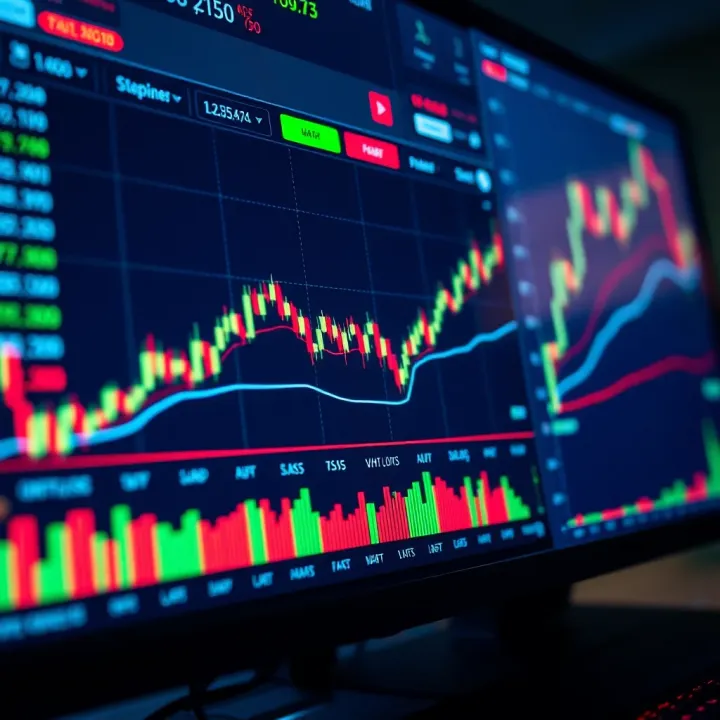
📈 Learn how forex trading works in Nigeria, get insights on key players, popular platforms like OPay & GTBank, plus tips to manage risks & boost your ₦ returns.
Based on 14 reviews