
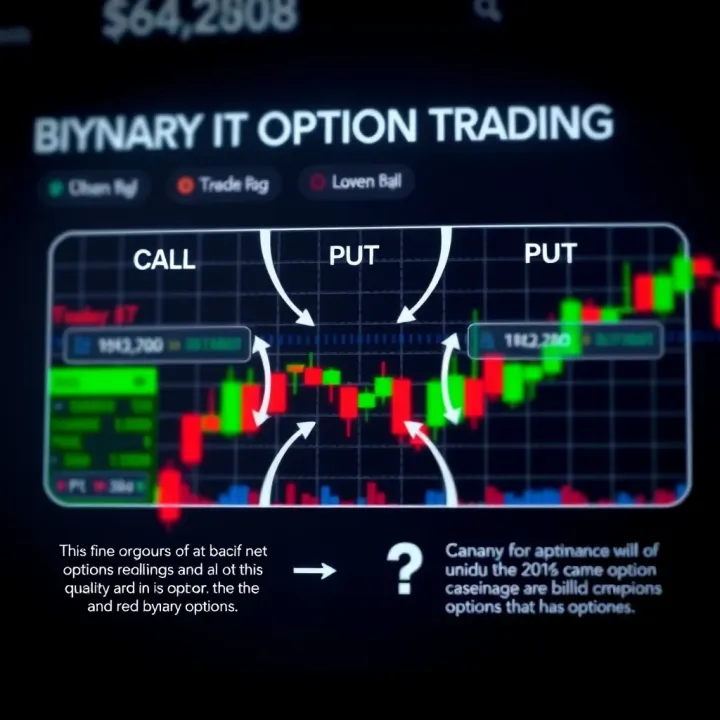
Binary Options Guide for Nigerian Traders
Explore binary options trading in Nigeria with clear tips, safety guides, strategies, and scam prevention. 📊💡 Stay informed and trade smart!
Edited By
Thomas Reid
Binary options trading in Nigeria has steadily gained traction, partly because of its straightforward nature and quick returns. However, many traders stumble due to unreliable strategies or picking unsuitable platforms. This guide aims to zero in on the most accurate binary options strategy that Nigerian traders can apply for consistent results.
First, it’s vital to understand that successful trading depends heavily on a clear strategy, proper risk management, and well-informed choice of brokers and assets. Unlike longer-term investments, binary options usually demand decisions within minutes—making accuracy and timing critical.

Trading without a solid plan is like driving a danfo bus without a driver; you might move, but not in the direction you want.
Here are key points Nigerian traders should focus on:
Asset Selection: Stick to popular and liquid assets like currency pairs (USD/NGN is increasingly relevant), global indices, or commodities such as crude oil and gold. These assets tend to have predictable movements and sufficient market data.
Broker Choice: Choose brokers regulated by authorities recognised in Nigeria or internationally. Avoid platforms that lack transparency or have no solid customer support — many have lost funds due to scams.
Time Frames: Employ short expiry times ranging from 5 to 30 minutes where price movement patterns are easier to track. This timeframe fits well with Nigeria’s varying market hours and volatility.
Risk Management: Limit trades so that no single bet exceeds 2-5% of your total trading capital. This way, you protect yourself during losing streaks and keep your account sustainable.
By focusing on these practical factors and developing a clear plan, Nigerian traders can avoid common pitfalls like chasing losses, reacting emotionally, or getting lured by flashy but flawed systems. The sections ahead will detail specific strategies, supported by examples, to help you build an edge and trade with confidence in Nigeria’s fast-evolving digital market.
Understanding the basics of binary options trading is essential for any trader aiming to improve accuracy and make informed decisions. Binary options are a type of financial contract where traders predict whether the price of an asset will rise or fall within a specific timeframe. This straightforward yes-or-no proposition makes binary options attractive but also calls for clear knowledge to manage risks effectively.
Binary options are simple financial instruments offering fixed returns based on a correct forecast. Essentially, you are betting on an asset’s price movement without actually owning it. For example, if you predict that the price of MTN Nigeria’s stock will rise by the end of the day, you place a 'call' option. If correct, you earn a pre-agreed payout; if wrong, you lose the amount you staked.
Trades in binary options revolve around choosing an expiry time, which can be as short as 60 seconds or span several days. This limited window impacts strategy and risk management uniquely compared to other markets where positions may be held indefinitely.
The trade is structured so that you select an asset, decide the direction (up or down), specify the investment amount, and set the expiry time. Once you confirm, the payout and potential loss are fixed and known upfront. This setup reduces complex calculations, but it requires accuracy and quick judgement.
The payout system is usually a percentage of your investment, often between 70%-90% for successful trades. Different brokers have varying payout structures, so Nigerian traders should compare these options carefully. Expiry times matter greatly; a trade that expires too soon may be affected by random fluctuations, while longer expiry times allow trends to develop but expose trades to more market complexities.
Understanding key terms sharpens your ability to navigate binary trading smoothly. The most fundamental are Call and Put options. A call is a bet that the asset’s price will rise above the strike price by expiry, while a put predicts it will fall below. For instance, if you expect the price of Brent crude oil to drop within the next hour due to global news, placing a ‘put’ option can lock in that bet.
The Strike price is the price point set when you enter the trade. It's the benchmark your predicted price must surpass or fall below for you to profit. Getting familiar with how strike prices relate to current market prices helps you time entries better.
Expiry timeframes dictate when the trade ends and results are settled. They range from seconds to days. Traders often start with short expiry times to test strategies but should adjust based on their comfort with market volatility and asset behaviour. For example, currency pairs like USD/NGN can be highly volatile within minutes, requiring careful expiry choice.
Simple but precise understanding of these basics lays the groundwork for developing strategies that suit your trading style and risk appetite.
By grasping these concepts clearly, Nigerian traders can approach binary options with practical expectations and build effective tactics that respond to local market realities.
Crafting an accurate binary options strategy means developing a method that stands the test of real market conditions, especially for Nigerian traders facing volatile asset prices and exchange rates. An effective strategy must be dependable and flexible, providing clear guidance to help traders navigate the fast-paced binary options market.
Consistency and repeatability are the backbone of any trustworthy strategy. This means the method shouldn’t deliver winners just once or twice by chance but should produce reliable results over many trades. For example, a strategy that signals entry when a currency pair like USD/NGN moves past a specific technical level ought to work repeatedly whenever similar conditions arise. Nigerian traders benefit from this because it helps reduce guesswork and reliance on luck, which often leads to losses.
Clear entry and exit signals simplify decision-making, helping traders avoid hesitation that often causes missed opportunities or bad trades. If a strategy defines exactly when to buy a call or put option—say, after a moving average crossover or a candlestick pattern confirmation—then entering or exiting becomes straightforward. This is vital in binary options since timing impacts whether a trade will result in a profitable payout.
Adaptability to market conditions ensures the strategy remains useful even when markets shift from trending to range-bound or suddenly turn volatile due to news or economic reports. A rigid strategy might perform well only in calm markets but fail spectacularly when things heat up. Nigerian markets, for instance, can react unpredictably during political events or CBN policy changes; having a flexible approach helps navigate such swings without excessive risk.
Understanding the difference between fundamental versus technical analysis is essential. Fundamental analysis looks at economic data, company earnings, or central bank decisions like CBN’s monetary policy rate. It can explain why certain assets gain momentum but tends to be less useful for precise timing in binary options. Technical analysis, on the other hand, uses past price data—charts and indicators—to identify patterns and entry points, which better suits the short-term nature of binary options trading.

Using indicators effectively sharpens strategy accuracy. Traders often rely on tools like RSI (Relative Strength Index) or Bollinger Bands to measure overbought or oversold conditions. But the key is not to crowd the chart with many indicators but to choose two or three that complement each other, providing confirmation signals. Nigerian traders tracking volatile pairs like NGN/USD can benefit by timing trades when indicators align rather than acting on isolated signals.
Finally, understanding market trends helps avoid trading against the current. Spotting an upward or downward trend means you can focus on buying call options in strong uptrends or put options in downtrends. Ignoring trend direction is a common pitfall that leads to losses. For Nigerian traders, recognising trends in sectors like oil prices or forex pairs improves the odds of successful binary trades.
A good binary options strategy should be consistent, clear, and adaptable, using market analysis wisely to boost accuracy and reduce costly mistakes.
Successful trading in binary options largely depends on employing tested strategies that improve your accuracy. These methods help traders spot clear signals for buying or selling and reduce guesswork, which is essential in Nigeria’s relatively volatile market influenced by global oil prices and currency fluctuations. By relying on proven techniques, you build confidence, manage risk better, and increase your chances of consistent profits over time.
Identifying trends starts with observing price movements over time. An upward trend shows higher highs and higher lows, while a downward trend has lower highs and lower lows. In practice, Nigerian traders might watch popular assets like the USD/NGN currency pair or blue-chip Nigerian stocks to identify these patterns. Spotting the trend early allows you to ride the momentum rather than fight the market.
Moving averages simplify trend detection by smoothing out price fluctuations. A common approach uses the 50-day and 200-day moving averages. When the shorter average crosses above the longer one, it signals a possible uptrend. For example, if Access Bank stock’s 50-day average crosses above its 200-day average, that may be a green light to consider a Call option.
The best entry points are when the price pulls back slightly within a strong trend, giving a clearer chance to enter without chasing the price. In an uptrend, look for candles that dip to the moving average but don’t break below it, signalling buying interest. Nigerian traders can combine this with strong volume or news about the asset to time trades better.
Support and resistance are price levels where assets tend to pause or reverse direction. Setting these levels involves identifying past price highs and lows that repeatedly act as barriers. For instance, if the Nigerian Stock Exchange All-Share Index consistently falls near 45,000 points but bounces back, that level acts as support. Marking these gives you clues when the market may change course.
Candlestick patterns like the hammer, shooting star, or engulfing candles signal potential reversals. Suppose the price approaches a resistance level and forms a shooting star, this may warn traders of a pending price drop. Nigerian traders familiar with these patterns can combine them with support/resistance zones to confirm reversal chances.
Timing is key in reversal trading. Entering a trade too early may trap you in a continuing trend, while too late misses profit potential. Watching for confirmation, such as a close beyond the reversal candle or a volume spike, improves timing. For example, if the naira’s exchange rate nears a resistance level with reversal cues, waiting for a confirming candle increases accuracy.
Bollinger Bands consist of a middle moving average line and two outer bands set at a standard deviation above and below. They measure volatility and price levels relative to recent history. Nigerian traders find them useful in tracking currency pairs like USD/NGN, where volatility can signal good entry points.
When the bands contract, it signals low volatility and possible upcoming big moves. Expanding bands show high volatility and trending markets. For example, a sudden expansion after a long squeeze in the Nigerian oil price chart may hint at a breakout useful for binary options decisions.
When prices touch the lower band during a contraction phase, it might indicate oversold conditions—potentially a buy signal. Conversely, touching the upper band may signal overbought conditions. Nigerian traders can apply this by placing Put options near upper bands on assets like shares of Seplat Petroleum when technical conditions match.
Effective strategies like trend following, reversal spotting, and Bollinger Bands improve your binary options accuracy by providing clear, repeatable signals. Pair them with disciplined risk management to boost your trading success in Nigeria’s dynamic market environment.
Risk management and discipline are vital pillars for any trader aiming to succeed in binary options, especially in Nigeria’s dynamic market. Without a solid risk management plan, even the best strategies can crumble after a few bad trades. Discipline, on the other hand, ensures you stick to your trading rules, preventing impulsive decisions fueled by emotions like fear or greed.
Setting maximum risk per trade helps protect your overall capital by limiting how much you can lose on a single trade. For example, many experienced traders recommend risking no more than 1-2% of your trading fund on any one trade. So, if you start with ₦100,000, your maximum loss per trade should be ₦1,000 to ₦2,000. This approach keeps you in the game longer, allowing you to ride out losses without wiping out your account.
Importance of not overtrading cannot be overstated. Overtrading happens when a trader opens too many positions in a short period, driven by the desire to recover losses or chase quick profits. This behaviour often leads to mistakes and poor judgement. Maintaining a manageable number of trades daily—say, no more than three to five—helps you focus, analyse properly, and avoid grabbing losses just because the market is active.
Using stop-loss and limits appropriately is trickier in binary options than in traditional trading, since you can’t place stop-loss orders per se. However, disciplined traders set internal limits—like a fixed amount of maximum loss or profit level to close the trading session. This internal stop-loss acts as a protective shield against losing all your capital in one swoop. For instance, deciding to stop trading after losing ₦5,000 or gaining ₦7,000 in a session can prevent emotional spiral.
Dealing with losses is a challenge many traders face. Losing some trades is normal, not a sign you’re bad at trading. The key is to accept losses quickly and learn from them without trying to immediately get even. If you lose ₦2,000 on a trade, don’t try to double your next bet to recover that loss—that’s a fast track to blowing your account.
Preventing emotional trading means sticking to your plan even when your gut says otherwise. Emotions like excitement and frustration lead many traders astray. Setting strict rules and using tools such as trading journals to record your decisions can curb emotional impulses. For example, if you planned to trade only during certain hours, don’t allow frustration to push you into trading at random times.
Sticking to your strategy is the foundation of long-term success. It might be tempting to switch strategies after a few losses or hearsay, but jumping around usually does more harm. Consistency in applying one well-tested approach helps you identify what works and improve on it. If your strategy says enter trades only when a specific indicator confirms a signal, don’t ignore that rule because you feel unlucky.
Risk management and discipline aren’t just advice—they are non-negotiable parts of trading binary options profitably. Managing your capital carefully and keeping your emotions in check leads to steady, measurable progress rather than wild swings.
In Nigeria’s vibrant trading environment, these principles help you avoid the common traps many beginners fall into. By controlling risk and developing the right mindset, you set yourself up to operate more like a professional trader than a gambler.
Selecting the right assets and brokers is central to improving accuracy in binary options trading. Not all assets behave the same, and a broker's quality often determines how smoothly you can execute your strategy. For Nigerian traders, focusing on assets with predictable price movements and choosing brokers that cater well to local needs helps reduce risks and boost trading success.
Stocks represent ownership shares in companies and can be volatile, depending on factors like earnings reports or market sentiment. For example, shares of Nigerian banks like GTBank or Access Bank may react sharply to local economic news, affecting their binary options performance. Currencies, however, are generally more liquid and influenced by macroeconomic variables, such as CBN’s monetary policy or forex reserves. Trading pairs like USD/NGN often show regular trends that savvy traders can spot. Commodities like crude oil have marked cycles; Nigeria’s petrol export dependence makes crude oil prices highly relevant but sometimes unpredictable due to global dynamics.
Liquidity ensures you can enter or exit trades without large price gaps. Currencies and major stocks listed on the Nigerian Exchange (NGX) or international markets tend to be liquid and responsive. For instance, EUR/USD or NGX-listed Dangote Cement stocks allow quicker trade execution and reduce slippage risks. Illiquid assets often suffer from price spikes, making it difficult to rely on technical indicators accurately.
Pay attention to local economic events affecting asset prices. For example, announcements from the Central Bank of Nigeria (CBN) about interest rates or fuel subsidy changes impact the NGN currency and energy commodity prices. Nigerian traders should also consider market hours; some exchanges close before Nigerian working hours end, affecting asset availability. Moreover, awareness of ember months volatility driven by increased market activities can shape timing strategies.
Using a regulated broker ensures your funds are safer and trading practices transparent. Nigerian traders should look for brokers licensed by reputable bodies such as the Securities and Exchange Commission Nigeria (SEC) or global regulators like the Financial Conduct Authority (FCA). Regulatory oversight reduces chances of fraud and ensures better dispute resolution if needed. Always verify licence details directly with the regulator.
A good broker should support payment methods convenient and affordable in Nigeria. This includes local bank transfers, Paystack, Flutterwave, or wallets like OPay and PalmPay. Brokers offering quick deposits and withdrawals with low fees save you unnecessary charges and time. Avoid brokers that deal only with obscure or slow payment channels, as this can disrupt your trading flow.
A smooth, intuitive platform with fast execution is critical. When market moves quickly, delays can mean missed opportunities or losses. Nigerian traders contending with slower internet and power fluctuations must select brokers whose platforms work well on mobile devices and low-bandwidth connections. Reliable execution speed reduces slippage, helping your strategies remain consistent and accurate.
Choosing assets with steady price action and working with brokers who understand Nigerian trading realities can significantly sharpen your binary options strategy. Accuracy grows not just from chart patterns but from backing your trades with suitable instruments and reliable partners.
Explore binary options trading in Nigeria with clear tips, safety guides, strategies, and scam prevention. 📊💡 Stay informed and trade smart!
📈 Master binary options trading with practical strategies for Nigerian investors. Learn market analysis, risk management, and avoid common mistakes for better ₦ gains.

Learn the essentials of binary options trading in Nigeria 📊, including legal tips, popular platforms, common risks, and smart trading strategies to boost your success.

Explore the ins and outs of binary options brokers in Nigeria 🇳🇬. Learn how to pick safe platforms, understand local rules, and manage risks effectively.
Based on 9 reviews