

How to Start Crypto Trading in Nigeria
Learn practical steps to start crypto trading in Nigeria 🇳🇬, from choosing reliable platforms and reading market moves to managing risks and following CBN regulations with ease.
Edited By
Sophia Mitchell
Starting forex trading in Nigeria can seem daunting, especially when it comes to figuring out the minimum capital you need to enter the market. The truth is, this amount varies widely depending on your broker, trading style, and risk appetite. Knowing how much to start with helps you avoid unrealistic expectations and steers you clear of emptying your wallet needlessly.
Most brokers offering forex accounts in Nigeria have set minimum deposits ranging roughly from ₦10,000 to ₦100,000. For instance, a broker like FXTM Nigeria may ask for as low as ₦15,000 to open a micro account, while others like Alpari require a higher threshold, closer to ₦50,000 or more. This variation stems from the account types they offer—micro, mini, or standard—each designed for different volumes of trading capital.
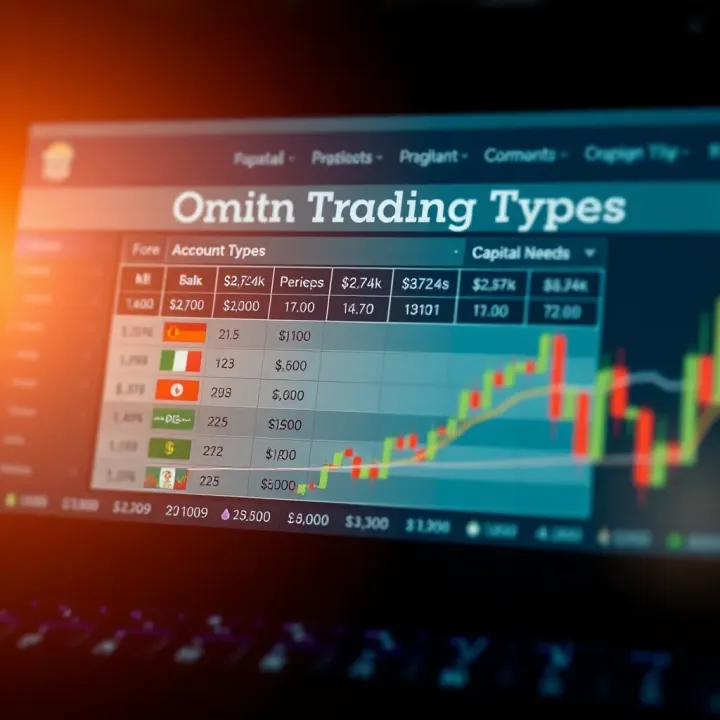
The minimum amount isn’t a fixed rule—it’s really about what level of risk you can handle and the broker’s policies.
Understanding account types is critical. A micro account usually allows you to trade with as little as $10 (around ₦7,500), letting you start small and learn the ropes. Mini and standard accounts demand heftier sums but grant larger position sizes and more flexibility. Choosing the right account depends on your available funds and how much you are ready to risk per trade.
Risk management must shape your initial deposit decision. Many experienced traders suggest risking no more than 1-2% of your trading capital on any single trade. To manage this prudently, your initial investment should be sufficient to spread out trades without overexposing your funds. For example, starting with ₦50,000 allows reasonable trading lots and the ability to endure some losses without wiping out your capital immediately.
Besides broker minimums, other costs like spreads, commissions, and occasional withdrawal fees affect your funding requirements. These can chip away at small deposits quickly, so a larger starting capital often reduces pressure to become profitable immediately.
In summary:
Broker minimum deposits in Nigeria range from ₦10,000 to ₦100,000.
Micro accounts suit beginners wanting to start small.
Risk only a small percent of your capital per trade (1-2%).
Consider additional trading costs that affect your funds.
By setting realistic funding goals aligned with your risk tolerance and trading style, you can approach forex trading in Nigeria with a clear strategy and avoid the common pitfalls of starting out unprepared.
Starting forex trading requires a clear understanding of how the market operates and the role of your initial capital. This overview sets the stage for deciding how much money you need to enter the market realistically, especially within the Nigerian context where brokerage requirements and local economic factors influence your starting point.
Forex trading is the exchange of currencies, buying one while simultaneously selling another. Traders speculate on currency price movements to make profits. For example, if you believe the US dollar will strengthen against the Nigerian naira (USD/NGN), you might buy dollars and sell naira, then later sell the dollars at a higher price. This buys-and-sell mechanism happens electronically across global markets 24 hours a day, five days a week.
This market’s practical appeal lies in its liquidity and accessibility. In Nigeria, traders usually participate through online brokers, who provide platforms to buy and sell currencies. Given Nigeria's economic conditions with fluctuating naira exchange rates, forex trading offers opportunities for both hedging and profit-making if approached wisely.
Nigerian traders tend to focus on both major and cross currency pairs. The major ones include USD/EUR, USD/GBP, and USD/JPY, reflecting global economic activity. Locally, pairs involving the naira—like USD/NGN—have gained attention, but these are less commonly offered by international brokers due to regulatory constraints.
For example, USD/EUR is popular because of stable liquidity and narrow spreads, while GBP/USD offers volatility, suitable for active traders. Awareness of which pairs match your trading style and access is important. Nigerian traders must also keep an eye on currency pairs impacted by domestic policy or FX controls, which affect pricing and spreads.
Your starting capital directly determines the size of trades you can enter. Brokers offer leverage—essentially borrowed money—to amplify potential gains or losses. For instance, with a leverage of 1:100, a ₦10,000 deposit could control a ₦1,000,000 position.
However, in Nigeria, leverage levels can be limited or risky due to exchange rate volatility and economic instability. Starting with too little capital might invite overleveraging, which is dangerous. Being realistic about how much capital supports comfortable trade sizes helps you avoid blowing your account with one wrong move.
Your capital shapes how you manage risk and strategise trades. A small account often demands tight risk management—meaning using small position sizes and strict stop-loss orders. Bigger accounts offer more flexibility, allowing traders to diversify strategies and absorb losses better.
For example, a trader starting with ₦50,000 needs to be very careful with leverage and position sizing. Conversely, someone with ₦500,000 can spread risk over several trades. Understanding this dynamic keeps expectations in check and guides you in choosing a trading approach that fits your funds and risk tolerance.
Starting forex trading in Nigeria isn’t just about the minimum deposit; it’s about knowing how your capital influences every trading decision, from trade size to risk management. Treat your starting fund as the foundation of a sustainable trading journey, not just an amount to meet broker requirements.

Understanding the factors that determine a broker’s minimum deposit requirement is key for anyone looking to start forex trading in Nigeria. This helped many traders avoid surprises and choose brokers that match their budget and trading style. Several elements influence how low or high this deposit can be, such as the type of account offered and specific policies aimed at Nigerian traders.
Forex brokers typically offer different account types: micro, mini, and standard accounts. Micro accounts usually require the least capital, often allowing deposits as low as ₦10,000 or ₦20,000. These accounts work well for beginners or traders wanting to test strategies without risking a lot. Mini accounts generally require a bit more — around ₦50,000 to ₦100,000 — and allow trades with a higher lot size, offering a balance between risk and potential returns. Standard accounts often call for at least ₦200,000 or more, targeting experienced traders who want to open larger positions.
Account type matters because it directly affects how much you must deposit initially and what kind of trades you can place. If you pick a micro account, the small trade sizes mean you can control risk better with less capital. However, the gains might be smaller. Choosing a standard account means you need higher funds but positions can be larger, which might increase profits and losses.
Many brokers tailor their minimum deposit requirements based on the Nigerian market. Most reputable brokers accept starting deposits between ₦10,000 and ₦50,000 for Nigerian traders. This range is accessible especially to retail traders but varies according to broker regulations. Also, some brokers provide special incentives, like reduced minimums or bonuses, to attract Nigerian clients.
Verification and compliance play a major role too. Nigerian traders must often provide valid identification (such as NIN, international passport, or driver’s licence) and proof of address. Brokers enforce these KYC (Know Your Customer) rules to comply with global anti-money laundering standards. This verification process can affect how quickly you can deposit and start trading. Being thorough with compliance ensures smoother operations and builds trust with your broker.
Brokers' deposit limits are not just about capital but also part of their business policies to manage risk and regulatory demands, especially for traders in countries like Nigeria.
By considering account types alongside broker requirements tailored for Nigeria, traders can estimate a realistic amount they need to start. This understanding helps target brokers with suitable offers and avoid unnecessary delays or surprises.
Setting realistic expectations about the capital you’ll need is key before stepping into forex trading. Many Nigerian traders start with different amounts based on their financial capacity, risk appetite, and trading style. Understanding practical starting points helps avoid frustration and better manages your trading journey.
Starting with ₦10,000 is attractive for complete beginners who want to test the waters without exposing too much of their money. At this level, however, position sizes will be very small, often limiting profit potential but allowing crucial practice in handling live trades. Meanwhile, ₦50,000 provides a middle ground where you can afford somewhat larger positions, giving more room for learning and reasonable chance at modest gains.
For serious beginners ready to commit more fully, ₦100,000 or above makes sense. That kind of starting capital allows more flexibility in trade sizing and better absorption of typical forex volatility. Realistic fund levels ensure you don't get overleveraged or tempted to chase unrealistic profits that market conditions won’t support.
Trade frequency and position size will directly depend on your available capital. With smaller accounts, frequent trading can quickly eat up capital through spreads and commissions. So it's wise to focus on selective high-conviction trades rather than opening many positions. Position sizes must be carefully controlled—often using micro or mini lots—to respect your risk limits and avoid margin calls.
Trading with small capital has its perks and headaches. On the plus side, it limits your exposure — you won’t lose a fortune on bad trades. It also encourages disciplined, cautious trading because every trade matters more. On the downside, small accounts often face limitations in trade size, higher relative costs, and pressure to produce quick results, which can lead to overtrading or reckless risk-taking.
In contrast, larger deposits provide room to diversify trades, manage risks flexibly, and withstand short-term drawdowns. Your trading strategy can accommodate longer-term approaches without the stress of instant survival. That said, bigger funds can tempt some traders into higher risks or too many positions. Good money management remains essential even when capital is plentiful.
A well-judged starting capital doesn’t have to be large — it needs to fit your risk tolerance, enable steady learning, and promote realistic trading habits. For Nigerian traders, considering local economic factors and brokerage requirements, ₦50,000 to ₦100,000 often strikes a reasonable balance.
Choosing your starting capital should factor in your financial comfort and trading goals rather than chasing minimal deposits alone. This approach sets you on a steadier path rather than one that burns out quickly due to unrealistic expectations or misguided risk.
Managing risk with your initial capital is the bedrock of sustainable forex trading, especially in Nigeria where market volatility can be high and economic variables affect currency pairs significantly. If you're starting with a small amount, your ability to protect your investment and control potential losses determines whether you survive long enough to grow your funds. Setting clear expectations about profits and losses reduces emotional trading and helps create a disciplined approach.
When trading with limited capital, protecting what you have becomes more important than chasing huge profits. Stop-loss orders limit your losses by automatically closing a trade once it reaches a specified negative price level. For example, if you open a EUR/USD trade with ₦50,000 and set a stop-loss at 2% below your entry price, you limit your loss to ₦1,000. This prevents a single loss from wiping out a significant portion of your account.
Take-profit levels secure gains by automatically closing a trade when it hits a target profit point. Without these limits, traders often let emotions interfere, dragging losing positions too long or closing winning trades prematurely. For small accounts, this discipline keeps losses manageable and profits consistent enough to build your trading balance over time.
Due to limited funds, you must adjust your trade sizes accordingly. Micro or mini lots are suitable, allowing you to enter trades without risking too much. For instance, instead of buying one standard lot (which can cost thousands of dollars), you trade a micro lot representing one-thousandth of a standard lot. This keeps your exposure low in line with your capital.
By scaling down your trade size to fit your account, you prevent overexposure and preserve your capital during inevitable market swings. It also lets you practice trading without risking all your funds on one position. Adjusting trade sizes in this way is crucial to staying in the game longer, while you build skills and confidence.
Leverage allows you to control large positions with a small amount of money, but it can quickly lead to big losses if misused. Many beginners fall into the trap of using maximum leverage, thinking it will multiply profits. In reality, high leverage amplifies both gains and losses, which can erase a small account fast.
For Nigerian traders, it’s safer to use low leverage — typically no more than 10:1 or 20:1 — depending on your comfort and account size. For example, with ₦50,000 at 10:1 leverage, you effectively trade ₦500,000, which offers reasonable exposure without catastrophic risk. Overleveraging often results in margin calls or forced closure of positions, wiping out your capital.
Starting with the mindset of making quick money leads many to disappointment. Forex trading is not a get-rich-quick scheme; it requires patience, education, and careful planning. Expecting daily double-digit returns or overnight success often causes reckless trades that harm your account.
Set reasonable goals based on your capital and experience. For example, aiming to grow ₦50,000 by 5% monthly is more attainable and sustainable than targeting ₦100,000 in a week. By managing expectations, you avoid the temptation to take high-risk bets that can blow your account. Remember, steady, incremental gains build lasting success.
Managing your initial capital with clear risk controls and realistic goals is what separates serious traders from hopeful gamblers. Keep losses small, profits consistent, and trade sizes modest — this approach improves your chance of growing your funds and staying in the forex market longer.
Getting started with forex trading in Nigeria requires more than just choosing a broker and understanding market basics. Funding and opening your trading account properly is a critical step that sets the tone for your trading journey. Taking practical steps ensures your funds are safe, transactions are smooth, and you comply with regulatory standards unique to Nigeria’s trading environment.
Regulatory Bodies and Broker Reviews
It's essential to pick brokers regulated by recognised bodies such as the Securities and Exchange Commission (SEC) Nigeria or international regulators like the Financial Conduct Authority (FCA). Choosing licensed brokers helps protect you from scams and malpractice common in the forex market. Reviews from trusted Nigerian financial websites and trader forums can give insight into brokers’ reliability, customer service, and withdrawal efficiency.
Despite tempting offers from unregulated brokers, focusing on reputable firms reduces the risk of losing funds or facing withdrawal delays. For instance, brokers that comply with SEC Nigeria’s standards are required to meet capital adequacy and reporting rules, thus fostering safer trading.
Payment Methods Compatible with Nigerian Banks
Before opening your account, confirm the broker supports convenient deposit methods linked to Nigerian banks. Many brokers now accept local bank transfers, which are faster and cost-effective. Some also integrate with popular payment platforms like Paystack, Flutterwave, or OPay, easing fund transfers without complicated currency conversions.
Knowing which payment channels are available helps avoid issues like high fees or blocked transactions, a common hassle with cross-border payments. For example, brokers supporting USSD banking payments can especially benefit traders who prefer simple mobile solutions over card payments.
Using Bank Transfers, USSD, or Online Payment Platforms
Nigerian traders typically fund their forex accounts through bank transfers supported by several local and international brokers. This method offers a straightforward way to move ₦ from your bank to the trading platform. USSD transfers are gaining traction, enabling deposits without internet access, which is handy in areas with poor connectivity.
Online payment platforms grant speedy deposits and sometimes instant account crediting. These platforms also add a layer of security by masking your banking details. For example, funding through Flutterwave or Paystack is popular because it mirrors the ease of local e-commerce payments.
Understanding Deposit Fees and Processing Times
Fees and processing times vary depending on payment method and broker policies. Bank transfers within Nigeria usually take from a few minutes up to 24 hours, depending on the bank and broker’s processing system. Some brokers absorb deposit fees, but others might charge a small amount, typically between ₦200 and ₦1,000.
It's vital to clarify these charges before your first deposit to avoid surprises. Quick processing means you can start trading sooner, critical in fast-moving forex markets. On the other hand, slow transaction times might delay position openings or stop-loss adjustments, exposing you to unnecessary risks.
Always verify your broker’s deposit procedures carefully, taking note of compatible payment methods, potential fees, and expected processing times to ensure a smooth start to your trading activities.
By following these practical steps, you protect your investment and streamline your entry into forex trading in Nigeria. This foundation supports better decision-making and risk management as you grow your trading experience.
Learn practical steps to start crypto trading in Nigeria 🇳🇬, from choosing reliable platforms and reading market moves to managing risks and following CBN regulations with ease.
📈 Learn practical forex trading steps tailored for Nigerian traders 🇳🇬. Master strategies, manage risks, and navigate the market to grow your ₦-wallet confidently.

Learn forex trading from scratch with practical steps, trusted Nigerian platforms, and smart risk management. Start your trading journey and grow your ₦ wallet! 📈🇳🇬
📈 Learn how forex trading works in Nigeria, get insights on key players, popular platforms like OPay & GTBank, plus tips to manage risks & boost your ₦ returns.
Based on 8 reviews