
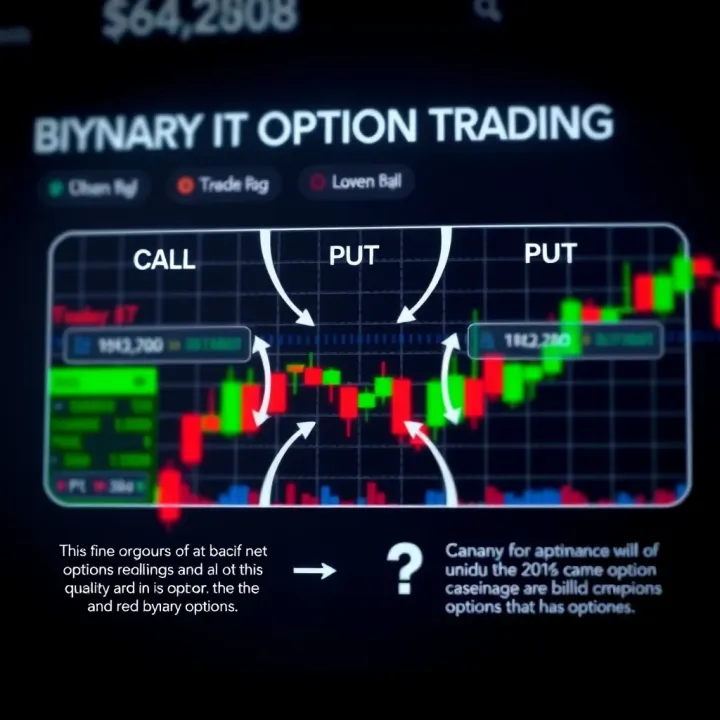
Binary Options Guide for Nigerian Traders
Explore binary options trading in Nigeria with clear tips, safety guides, strategies, and scam prevention. 📊💡 Stay informed and trade smart!
Edited By
Amelia Price
Binary options represent a straightforward financial instrument where you predict whether an asset’s price will go up or down within a short time frame. Unlike traditional stock trading, where profits depend on how much the price changes, binary options offer a simple ‘yes’ or ‘no’ gamble — either you win a fixed amount or lose your stake.
In Nigeria, this form of trading has attracted attention because of its simplicity and quick returns. For example, you might invest ₦10,000 predicting that the price of oil futures will rise within the next 30 minutes. If you’re right, you could earn around 70% profit, earning ₦17,000 in total depending on the broker. If you’re wrong, you lose the entire ₦10,000.

Binary options usually involve popular assets like foreign exchange pairs (e.g., USD/NGN), commodities such as crude oil or gold, and major stock indices. What makes it appealing is the clear risk and reward upfront — you know exactly what you can lose or gain before placing your trade.
Choose an asset: This could be any tradable item like forex, stocks, or commodities.
Select expiry time: This can vary from 30 seconds to several days.
Predict price direction: You bet on whether the asset’s price will be above or below a certain point at expiry.
Invest an amount: This is the stake you risk losing or winning on.
Your broker then verifies the outcome after expiration, paying out if your prediction is correct.
It’s worth remembering that binary options may look simple but carry significant risks, especially given their all-or-nothing nature. This means your whole capital can vanish in minutes if you’re unlucky or uninformed.
Many Nigerians see binary options as a fast way to increase income without complex analysis. However, without understanding the mechanics, market influences, and scams, investors can fall victim to considerable losses. Trading platforms can vary widely in legitimacy, so knowing the rules and recognising reliable brokers is vital.
This guide aims to break down what binary options really mean for Nigerian investors, highlighting practical tips to trade wisely, avoid common pitfalls, and make better financial decisions in this volatile space.
Understanding binary options is essential for Nigerian investors who want to explore this type of trading confidently and responsibly. Binary options offer a straightforward way to potentially profit from market movements without owning underlying assets. However, knowing how they work helps avoid common mistakes and manage risks effectively.
Binary options are a type of financial contract where you predict whether an asset’s price will rise or fall within a set time frame. It's called "binary" because there are only two possible outcomes — win a fixed amount or lose your stake. For example, if you predict that the price of crude oil will be higher in the next hour, and you are right, you earn a pre-agreed payout. If you are wrong, the investment is lost.
This simplicity makes binary options attractive, especially to new traders in Nigeria who might find traditional stock or forex trading complicated. The limited outcomes mean you know your potential profit or loss upfront, which aids budgeting your investments.
Binary options differ from traditional trading in that you do not actually buy the asset. With stocks or forex, you own or exchange the asset directly, facing variable profit or loss depending on price changes. In contrast, binary options offer fixed returns regardless of how much the price moves beyond your prediction. That said, this also means you miss out on large gains if the market moves significantly in your favour.
Placing a binary option trade involves choosing an asset, deciding the amount to invest, and selecting an expiry time when the option closes. For instance, you might decide to invest ₦10,000 on the price of the Nigerian Naira strengthening against the US Dollar within the next 15 minutes. After the time expires, the platform checks if your prediction was correct or not, then settles your winnings or losses.
The two main positions in binary options are call and put. A call option means you believe the asset price will go up by the expiry time. For example, if you think the price of Lagos property shares will increase next week, you choose call. On the other hand, a put option means you expect the price to fall. This works well if you believe poor government policies might drag down the shares.
Many Nigerian investors find call and put options intuitive because they directly reflect simple "up or down" market views. Still, it’s wise to combine this understanding with thorough market research before betting real money.
Grasping these basics provides a solid foundation for handling binary options. It helps investors make informed choices rather than guessing and falling into common traps, especially in Nigeria’s sometimes volatile markets.
Understanding the common types of binary options is essential for Nigerian investors considering this form of trading. Each type offers different ways to predict market movements and has varying risk profiles and payout structures. Knowing these distinctions helps traders choose the best options to suit their strategy and risk appetite.
High/Low options are the most straightforward and widely used type of binary options. The trader predicts whether the price of an asset—like a stock, commodity, or currency pair—will end up higher or lower than the current price when the option expires. If the prediction is correct, the investor earns a fixed payout; if wrong, they lose their investment.
This simplicity makes High/Low options very popular among beginners and experienced traders alike. For instance, a trader may expect the price of Nigerian Naira against the US dollar to rise before the market closes. Placing a "call" option bets on the rise, while a "put" option bets on a fall.
High/Low options suit markets with clear short-term trends or predictable news impacts. For example, before the Central Bank of Nigeria (CBN) announces a change in monetary policy rate, traders might speculate on the immediate effect on the naira. Similarly, during earnings season, investors could take High/Low options on stocks listed on the Nigerian Exchange (NGX) based on expected performance.
They are practical for quick, decisive bets without complex calculations. However, the all-or-nothing nature means the trader must be confident in the direction within a fixed time frame, typically minutes to an hour.
Touch options require the asset price to reach or "touch" a set level during the option's lifetime, regardless of where it ends up. No Touch options win if the asset price never reaches the specified level before expiry. These options allow traders to benefit from expected price volatility or stability.
For example, a trader might predict that the price of Brent crude oil will touch ₦20,000 per barrel at some point in the next hour (Touch), or conversely, that it will stay below that level throughout (No Touch).
Touch options are useful when expecting strong market moves triggered by events like elections or IPO announcements. If there's speculation that NGX-listed stocks might spike due to positive government policy, a Touch option on a target price could pay off.
No Touch options are chosen when the market is expected to remain calm or within a range. For instance, during a dry season for economic news in Nigeria, you might bet that the naira-Dollar rate won’t hit certain extreme levels (No Touch), collecting a payout if it stays stable.
Range options require the asset’s price to stay within a pre-defined price band for the entire life of the option. Traders select these when they expect low volatility or sideways movement. The payout occurs if the price never breaks out of this range.
For example, a trader might predict that the NGX All-Share Index will stay between 40,000 and 42,000 points during a day with no major external shocks.
Range options usually offer lower payouts compared to High/Low or Touch options because predicting a narrow, stable price band is harder. However, the risk is somewhat reduced if the market is indeed calm. Conversely, sudden news or market shocks can cause the price to break the range, leading to complete loss.
Nigerian traders should weigh the political and economic calendar when using Range options since local market dynamics like oil price shifts or policy announcements can disrupt expected stability.
Selecting the right type of binary option depends on your market outlook, risk tolerance, and experience. Understanding these common options allows traders to tailor their strategies effectively, especially in a volatile market such as Nigeria’s.
By recognising how High/Low, Touch/No Touch, and Range options work, Nigerian investors can better navigate the opportunities and pitfalls in binary options trading.
Binary options trading has grown noticeably popular among Nigerian investors seeking quick returns without the need for complex market analysis. Many Nigerians are attracted to binary options because it offers a straightforward approach where the trader predicts whether an asset’s price will rise or fall within a fixed timeframe. This simplicity appeals especially in a market where easy access to global assets, like oil prices or tech stocks, is now just a click away.
That said, participating in binary options trading requires a clear understanding of local conditions, including regulatory realities and platform reliability. Given Nigeria’s vibrant fintech scene, many traders have access to foreign and local platforms, sometimes navigating currency conversions and payment methods in the process.
Currently, binary options are not explicitly regulated by Nigerian financial laws, which creates a grey area for investors. While there is no outright ban, the lack of explicit rules means traders must steer carefully as fraudulent schemes can present themselves as genuine brokers. For many Nigerians, this legal uncertainty means transactions carry added risks beyond normal market fluctuations.
The Securities and Exchange Commission (SEC) in Nigeria oversees capital market activities but has issued multiple warnings about unregulated binary options trading platforms. It does not licence binary options brokers, so any groundwork towards regulation remains under development. The SEC encourages investors to verify the authenticity of any platform trading in securities or derivatives to avoid scams, which have happened severally in recent years.
Regulators often highlight the high risk and all-or-nothing nature of binary options trading. Nigerians are advised to avoid platforms with dubious credentials or unreasonable promises of high returns with minimal effort. Educational campaigns emphasise verifying registration status with SEC, understanding terms, and investing only what one can afford to lose. This cautious stance is vital because some fraudsters target inexperienced Nigerian investors claiming to provide guaranteed profits.
Nigerian investors often use global platforms like IQ Option, Binomo, and Olymp Trade, which support multiple languages and provide easy user interfaces. While these platforms are not Nigerian-based, they allow access to popular markets such as forex, commodities, and indices. However, platform choice must consider withdrawal convenience, customer support quality, and local user reviews given some experiences with withdrawal delays.
Payment methods preferred by Nigerian traders include bank transfers through local banks, debit cards, and USSD codes facilitated by services like Paystack and Flutterwave. Some platforms allow deposits via mobile money or cryptocurrency wallets, appealing to users without formal banking. Ease and speed of fund transfers matter since naira volatility and banking restrictions can slow deposits and withdrawals, affecting trading timing.
Before choosing a platform, verify that it accepts Nigerian Naira directly or offers smooth currency exchange to avoid unnecessary charges.
In summary, binary options trading presents opportunities for Nigerians but demands vigilance regarding legal status, platform reliability, and payment methods. Understanding these factors before investing can prevent financial losses and help make trading more manageable and less risky.
Trading binary options carries significant risks that every Nigerian investor must understand before committing funds. The appeal often lies in the simplicity and high potential returns, but these come with a downside that can lead to substantial losses if not managed carefully.
Binary options are known for their all-or-nothing payoff structure. When you place a trade, you either earn a fixed return if your prediction is correct, or you lose your entire investment in that trade. For example, if you predict that the price of a stock will rise and it doesn’t, you stand to lose 100% of your stake on that option. This zero-sum scenario increases the risk compared to traditional trading, where you might still recover some value by selling an asset.
This feature can tempt traders to place risky bets, hoping for quick gains, but the reality is harsh. One wrong decision can wipe out your investment for that trade, so managing the stakes prudently is vital.
Unfortunately, binary options markets are fertile ground for scams, especially in countries like Nigeria, where regulatory oversight is limited. Some platforms offer unrealistic returns, manipulate prices, or use aggressive marketing tactics to lure investors into depositing money that they cannot withdraw later.
Investors often share stories of platforms freezing accounts or refusing withdrawal requests without clear reason. This risk amplifies in an unregulated space where brokers don’t have legal obligations to protect traders. Nigerian regulators like the SEC have issued warnings, but many shady brokers still operate online and target inexperienced traders.
Market volatility, or rapid price fluctuations, directly affects binary options outcomes. Because payouts depend on price predictions within a short timeframe, unexpected market events can turn a seemingly sure bet into a loss.
For example, a sudden change in oil prices can move the Nigerian stock market quickly, causing the option to finish out of the money. This volatility introduces uncertainty that may not be obvious to new traders, making the trading environment much less predictable.
Choosing a reputable broker is the first line of defence against fraud. Look for platforms regulated by recognised authorities such as the Cyprus Securities and Exchange Commission (CySEC) or those with good reviews from verifiable sources. While Nigerian regulators have limited jurisdiction over foreign brokers, selecting a regulated platform reduces the risk of unfair practices.
Be wary of brokers making exaggerated promises or those who pressure you to deposit large amounts quickly. A genuine broker provides transparent terms, clear withdrawal policies, and accessible customer support.
Reducing losses requires adopting sound trading strategies rather than chasing quick profits. This includes setting strict limits on how much to invest per trade and avoiding the temptation to double stakes after losses.
You can also limit exposure by diversifying trades across different assets, like forex, indices, or popular Nigerian stocks such as Dangote Cement or MTN Nigeria. Using demo accounts first helps you understand market behaviour without risking real money.
Education is a powerful shield against errors and scams. Before investing, learn about market fundamentals, trading strategies, and how global events impact asset prices. Many platforms offer educational resources which Nigerians should make use of.
Careful decision-making means avoiding emotional trading and impulsive gambles. Keeping a trading journal to review wins and losses can reveal patterns and help improve future choices.
Protecting your money in binary options trading demands discipline, patience, and careful choice of brokers. Without these, even the most attractive opportunities can turn into costly mistakes.
By understanding these risks and ways to manage them, Nigerian investors can navigate binary options trading more confidently and reduce the chance of losing hard-earned funds.
Trading binary options can be tempting due to its simplicity and the potential for quick returns. However, for Nigerian investors, it’s essential to approach this market with clear strategies and caution to avoid financial pitfalls. Practical tips can help you build sound trading habits, manage risks better, and stay informed in a space prone to scams and rapid market changes.
A demo account lets you trade binary options using virtual money. For Nigerians stepping into this world, this is a critical first step. Demo platforms replicate live market conditions, giving you the chance to understand the mechanics without risking your naira. For instance, platforms like IQ Option and Olymp Trade offer demo accounts that simulate real trading environments. This practice helps you test strategies, learn how to place call or put options, and get familiar with platform features.
Jumping straight into real money trading without experience can lead to early losses. With a demo, you learn how timing affects outcomes, especially with binary options where expiry times can be very short. It’s a way to build confidence and spot mistakes early.
Binary options trading is risky and can be quite volatile. Setting achievable targets prevents unrealistic expectations and reckless moves. For example, instead of aiming to double ₦50,000 in a week, plan for smaller but consistent gains like 5-10% weekly. This mindset helps you stay disciplined and avoid chasing losses.
Alongside goals, establish clear daily or weekly loss limits. Suppose you decide not to lose more than ₦5,000 a day; once hit, you stop trading. This prevents emotional decisions that arise when desperate to recover losses, a common trap many Nigerian traders fall into, especially during ember months or economic downturns.
Binary options trading reacts quickly to market events. For Nigerian traders, staying updated on local and global economic news is essential. Changes in crude oil prices, CBN monetary policy shifts, or political developments can swing markets dramatically. By tracking reliable sources like business papers or financial broadcasts, you position yourself to make informed calls.
For example, a sudden announcement affecting the Naira exchange rate can influence binary options related to forex pairs. Ignoring such news could lead to poor timing and losses.
The all-or-nothing nature of binary options makes emotional discipline vital. Nigerians often face pressure from family or peers to earn fast money, which can make emotions run high. In such moments, traders may increase stakes hoping to recover losses, leading to bigger risks.
Practise detachment by sticking to your trading plan and limits. If a trade doesn’t go your way, accept the loss as part of learning. Avoid revenge trading or impulsive bets; instead, wait for clear opportunities aligned with your strategy.
Emotional control is the backbone of survival in binary options trading. Without it, even the best strategies collapse.
Putting all your money into binary options is risky, more so when the marketplace lacks full regulation. Nigerians should diversify to spread risk. For example, alongside binary options, you could invest in fixed-income securities, peer-to-peer lending, or mutual funds available locally.
Within binary options, don’t limit yourself to one asset or expiry time. Experiment with varied expiry durations and asset types, like commodities or stock indices, to avoid exposure to sudden market shocks. This approach reduces the chance of losing your entire capital on one bad trade.
Taking these tips seriously can improve your chances of trading success, reduce stress, and protect your savings while navigating the unpredictable world of binary options in Nigeria.
Explore binary options trading in Nigeria with clear tips, safety guides, strategies, and scam prevention. 📊💡 Stay informed and trade smart!

Learn the essentials of binary options trading in Nigeria 📊, including legal tips, popular platforms, common risks, and smart trading strategies to boost your success.
Explore the ins and outs of binary options brokers in Nigeria 🇳🇬. Learn how to pick safe platforms, understand local rules, and manage risks effectively.
Explore binary options trading in Nigeria 📈. Learn how it works, risks, legal points, strategies, and tips for safe and smart trading decisions.
Based on 7 reviews