

Understanding the Binary Number System
Explore the binary number system basics, history, and its vital role in computing 🖥️. Learn conversions, arithmetic, and its use in digital tech across Nigeria.
Edited By
Isabella Clarke
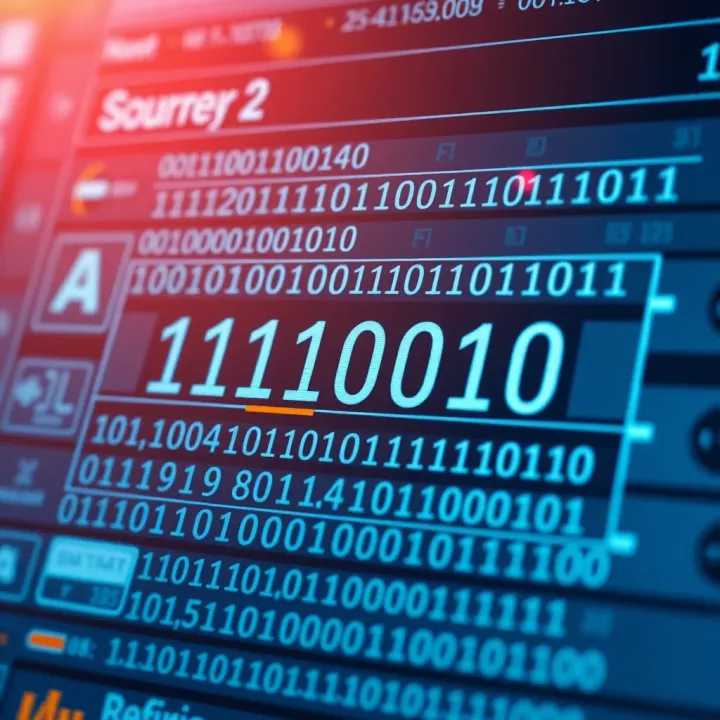
The binary number system is the backbone of how modern computers operate. Unlike the decimal system we use daily, which has ten digits (0 to 9), binary works with just two digits: 0 and 1. This simplicity allows computers to represent and process data using electrical signals—either off (0) or on (1).
This method fits perfectly with the physical components of a computer, such as transistors and circuits, which have two states: conducting or non-conducting. By organising 0s and 1s into sequences called bits, computers can encode numbers, text, images, and even sound.

While decimal numbers might be easier for humans, binary is what runs behind the scenes in every smartphone, bank ATM, or online trading platform, including those used across Nigeria.
Handling just two states simplifies hardware design and reduces error risks during data processing. The binary system is less prone to signal degradation or noise compared to systems with more states. This reliability is why Nigeria’s fintech firms, like Paystack and Flutterwave, build on binary-based computing for secure payment processing.
Decimal (Base 10): Our daily counting system with ten symbols.
Binary (Base 2): Only 0 and 1, used internally by digital devices.
Hexadecimal (Base 16): Uses sixteen symbols (0-9, A-F) and often serves as shorthand for binary to simplify coding and debugging.
For instance, the binary sequence 1101 equals 13 in decimal or D in hexadecimal. This shorthand is crucial in computer programming and financial software development.
Binary codes represent:
Numbers: Each decimal number converts to a specific binary value.
Text: Characters are encoded using standards like ASCII or Unicode.
Images and Audio: Pixels and sound waves are digitised into binary data for storage and transmission.
In Lagos stock trading platforms, the swift processing of vast binary data ensures transactions occur seamlessly within milliseconds.
Understanding the binary number system is essential for professionals in finance, education, and technology sectors, especially as Nigeria’s digital economy grows. Knowing how data is represented helps in appreciating the reliability, speed, and security of modern computing systems around us.
Understanding the binary number system is essential because it forms the backbone of all modern computing devices. Whether you're using a smartphone, laptop, or even automated trading platforms, binary code works behind the scenes to store and process information. For financial analysts, traders, and investors, this knowledge offers insight into how data moves and transforms in digital finance, making it easier to appreciate the reliability and speed of computing systems.
Learning the basics of binary also helps demystify what happens when you enter figures or commands on computer software. For example, when you input a ₦50,000 transaction on an app like Paystack or Flutterwave, the computer converts these figures into binary to execute the action securely and quickly. This section sets the stage for grasping more complex computing concepts that influence fintech and digital ecosystems within Nigeria.
The binary number system uses only two symbols: zero (0) and one (1). These two digits represent off and on states, or low and high electrical signals, inside computer circuits. Unlike everyday decimal numbers, which use ten symbols (0–9), binary relies solely on these two digits to encode all kinds of data.
Each digit in a binary number is called a "bit". Eight bits combine to form a "byte," which can represent everything from alphabet letters to financial figures. For instance, the letter 'A' is represented in binary as 01000001. This simplicity—using only two states—makes computers highly efficient in processing and storing information.
The decimal system, the one we use daily, has ten digits, from 0 through 9. This system operates on a base-10 scale, making it intuitive for humans who count using their ten fingers. When you buy goods at a mama put or calculate profits, you deal with decimal numbers.
However, computers can struggle to represent decimal values directly. Instead, they convert decimal inputs into binary for internal processing. This translation explains why understanding both systems helps in comprehending how data inputs and outputs interact in digital devices.
Besides decimal and binary, octal (base-8) and hexadecimal (base-16) systems serve particular roles in computing. Octal simplifies binary by grouping bits in sets of three, while hexadecimal groups bits in fours.
Hexadecimal is especially common among developers and engineers because it's more condensed and easier to read than long binary strings. For example, the binary sequence 1111 1111 corresponds to FF in hexadecimal. In Nigerian software development circles, understanding these numbering systems helps when dealing with low-level programming or debugging applications.

The binary number system, with its simple two-state design, offers a reliable and efficient way for computers to handle complex data, making it foundational for Nigerian digital technology.
Binary uses two digits: 0 and 1
Decimal is human-friendly with ten digits
Octal and hexadecimal serve as shortcuts for binary
Getting familiar with these number systems enables a better grasp of how digital platforms like OPay, Kuda, or Jumia Nigeria operate seamlessly behind the scenes.
Computers rely on the binary number system primarily because it simplifies how machines process and store information. Unlike human counting systems, which often use ten digits, computers depend only on two states, represented as 0 and 1. These two signals align neatly with the physical realities of electronic components inside computers, which either allow current to flow or block it. This simplicity not only eases design but also improves efficiency and reliability, especially in environments prone to electrical noise.
The binary system matches perfectly with how electronic circuits work. In a digital circuit, a switch can either be off or on — no middle ground. These on/off states correspond directly with the binary digits 0 and 1. This straightforwardness makes the design and manufacturing of computer hardware less complex and more cost-effective. For instance, the central processing units (CPUs) in laptops or even mobile phones use billions of tiny transistors that switch between two states, enabling rapid calculations and data handling.
In practice, this means the logic gates inside a CPU perform operations like AND, OR, and NOT on binary inputs, shaping the foundation of all computing tasks. Compared with using more states—imagine a machine trying to distinguish five or ten voltage levels—the binary approach is much easier to implement and more reliable. Hardware designers in Nigeria’s growing tech hubs benefit from this, as it lowers manufacturing costs and maintenance needs.
Binary’s two-state system is naturally robust against electrical interference, a common challenge in many Nigerian settings. Power fluctuations and electromagnetic noise—caused by everything from generator sets to overloaded power lines—can distort analog signals severely. Computers circuitries that rely on multiple voltage levels may misinterpret these signals, leading to errors.
With binary, circuits only need to detect whether a signal is high or low, not its exact value. This tolerance for noise means devices can function reliably even in places like Lagos or Kano, where stable power supply is often a problem. For example, an ATM or a POS terminal in a busy market area will still operate smoothly because its binary-based systems can distinguish clean ON or OFF signals despite surrounding electrical disturbances.
In essence, the binary number system’s electrical and logical simplicity paired with noise resilience makes it indispensable for computing, especially in challenging environments like those in Nigeria.
These practical advantages explain why the binary number system remains the backbone of computer operations, from giant data centres to handheld smartphones, regardless of location or conditions.
Understanding how binary numbers operate in computers is central to grasping their digital nature. Binary is not just abstract math; it directly affects how devices handle, store, and process the data we use daily, from smartphone texts to banking transactions. At its core, computers simplify complex information into ones and zeros, allowing reliable communication even amidst electrical noise common in many Nigerian environments.
Computers break down all data into bits — short for 'binary digits'. Each bit can only be a 0 or a 1. Combining eight bits creates a byte, which is the basic building block for representing more complex data. For example, a single byte can encode one character in text, such as the letter 'A' or a digit like '3'. This system is practical in Nigerian computing, where devices like POS terminals or ATMs process data using bytes to ensure speed and accuracy.
Since bytes group bits, larger data sets like images, videos, or documents are expressed as thousands or millions of bytes. A typical smartphone photo may take up several megabytes (millions of bytes), exemplifying how everyday technology relies heavily on binary data organisation.
Text and characters you see on your screen are actually stored in binary code. The most common system is ASCII, where each letter or symbol corresponds to a unique 7-bit or 8-bit binary number. For instance, the capital letter 'B' is represented by 01000010 in binary.
Other character encodings like Unicode have extended this to accommodate the numerous languages spoken in Nigeria, including Hausa, Igbo, and Yoruba, which often use special characters not found in ASCII. Your computer or phone translates these binary codes back into readable text, allowing you to type and read in multiple Nigerian languages without issue.
Just like decimal arithmetic, computers perform addition and subtraction with binary numbers. The process follows simple rules: 0 + 0 equals 0, 1 + 0 equals 1, but 1 + 1 equals 10 (which is 0 with a carryover 1). This carryover aspect resembles how we carry over in decimal addition when sums exceed 9.
This binary arithmetic enables processors to carry out calculations needed in applications such as mobile money transactions or stock market analyses on Nigerian platforms. Quick, precise binary computations ensure that financial data updates immediately and accurately.
Computers don't just add or subtract; they make decisions using logic gates — electronic circuits that implement Boolean logic. Basic gates include AND, OR, NOT, NAND, and NOR, each performing simple true/false checks.
For example, an AND gate outputs 1 only if both inputs are 1, which helps in decision-making at the circuit level. These gates combine to execute complex instructions, powering everything from your laptop to bank servers handling online transactions in Nigeria. Their reliability ensures systems keep running smoothly, even when processing large amounts of binary data.
Understanding these binary processes sheds light on how everyday technology—from browsing Naija news sites to using banking apps—works behind the scenes with minimal error or delay.
This detailed binary machinery lays the groundwork for the computers and digital devices that drive Nigeria's fintech and tech industries forward.
The binary number system is fundamental to how computing operates across Nigeria, from basic mobile phones to enterprise servers. Its role in data storage and digital communication ensures everyday technology functions efficiently. Understanding these applications sheds light on how binary underpins Nigeria's growing tech ecosystem.
Data storage in Nigerian devices relies heavily on the binary system. Whether you're using a smartphone from brands like Tecno or Infinix, or a laptop tuned for business analytics, the information you save is encoded in bits—zeros and ones. These bits combine to represent text, images, and video.
For instance, when a Lagos-based trader saves sales reports on a laptop, those documents are stored in binary-coded form within the computer’s memory. Devices use volatile memory like RAM to temporarily hold this binary data for quick access, while non-volatile memory such as solid-state drives (SSD) keeps it permanently. This binary encoding guarantees rapid data retrieval despite power fluctuations common in many Nigerian locations.
Moreover, binary storage organisation supports efficient use of limited hardware resources — crucial in a setting where Nigerians often work with mid-range devices due to cost constraints. Apps like financial record keepers or portfolio trackers convert all user input into binary behind the scenes. This system enables compatibility and interoperability across platforms, whether on Android or Windows, ensuring your business data remains intact and accessible.
In Nigeria's bustling telecom landscape—featuring MTN, Glo, Airtel, and 9mobile—the binary system enables seamless digital communication. When you send a WhatsApp message or process a mobile money transaction via OPay, the information moves as binary signals across network infrastructures.
These binary signals are less susceptible to errors over long distances or poor network conditions, which can be common in rural areas. Networking devices interpret ones and zeros to execute complex routing, switching, and error correction protocols, facilitating reliable connections.
Furthermore, binary encoding supports internet protocols such as TCP/IP and HTTP that Nigerians depend on daily. For traders using online platforms like Jumia Nigeria or Konga during ember months sales, binary-driven data packets ensure smooth transactions and timely updates.
The efficiency of the binary number system in managing data storage and communication directly influences the productivity and growth of Nigerian businesses operating in a digital economy.
In summary, the binary number system remains vital to everyday computing in Nigeria. It powers the devices storing your business data and the networks transmitting your information securely. As Nigeria’s digital infrastructure expands, a strong grasp of binary's practical role will help tech users and professionals alike appreciate how foundational it is to modern computing.
The binary number system remains the backbone of current computing technology, but ongoing advances are hinting at new frontiers. Understanding future trends helps investors and tech professionals anticipate shifts that could reshape industries, including Nigeria’s growing tech sector. Though alternatives to the binary system spark interest, binary computing continues to hold strong for its proven reliability and efficiency.
Researchers worldwide are exploring systems beyond traditional binary computing. Quantum computing, for instance, uses quantum bits (qubits) that can represent multiple states simultaneously, offering powerful processing ability for complex problems such as cryptography and large-scale simulations. Nigerian fintech firms and tech startups eye these potentials for more secure transactions and faster data processing, although practical commercial use remains some years away.
Meanwhile, ternary systems—using three states instead of two—offer a compact way to store information and perform calculations. While less common than binary, ternary computing can reduce hardware complexity and improve energy efficiency. These developments may influence specialised applications, such as AI algorithms or embedded devices where power and space are limited, but widespread adoption still faces technological challenges.
Despite the excitement around new number systems, binary computing remains fundamental in Nigeria’s tech landscape. From the smartphones in Lagos to the data centres powering e-commerce platforms like Jumia Nigeria and payment services like Paystack or Flutterwave, binary logic drives everyday operations. Its simplicity aligns well with current hardware, making it cost-effective for Nigerian businesses investing in tech infrastructure.
Local software developers also rely on binary foundations when designing applications for banking (like GTBank or Zenith Bank apps), telecommunications (MTN, Glo), and even smart grid power solutions addressing electricity irregularities. Binary's compatibility with existing digital communication protocols ensures seamless integration and reliable performance, crucial factors in Nigeria’s sometimes challenging tech environment.
While exploring quantum or ternary computing is exciting, Nigeria’s tech ecosystem will continue to depend heavily on binary systems for years to come due to existing infrastructure and practical considerations.
To sum up, the future will blend emerging alternatives with trusted binary methods. For traders, investors, and educators, recognising this balance helps in making informed decisions and appreciating the ongoing value of the binary number system within Nigeria’s advancing digital economy.
Explore the binary number system basics, history, and its vital role in computing 🖥️. Learn conversions, arithmetic, and its use in digital tech across Nigeria.

Explore how decimal ten converts to binary 🔢, understand bit length, and see why binary matters in computing for digital systems in Nigeria 🇳🇬.

Learn how a binary number calculator 🧮 simplifies binary calculations, explore features, step-by-step use, practical tips, and common applications.
Explore how the binary system powers computing, digital security, and telecommunications in Nigeria's tech scene 💻. Understand binary basics vs decimal, plus arithmetic.
Based on 11 reviews